
What Is Cone Dyed Yarn?
Cone dyed yarn is coloured on a permeable package before knitting or weaving. Learn how liquor circulation, package density and controlled processing determine shade consistency and performance.
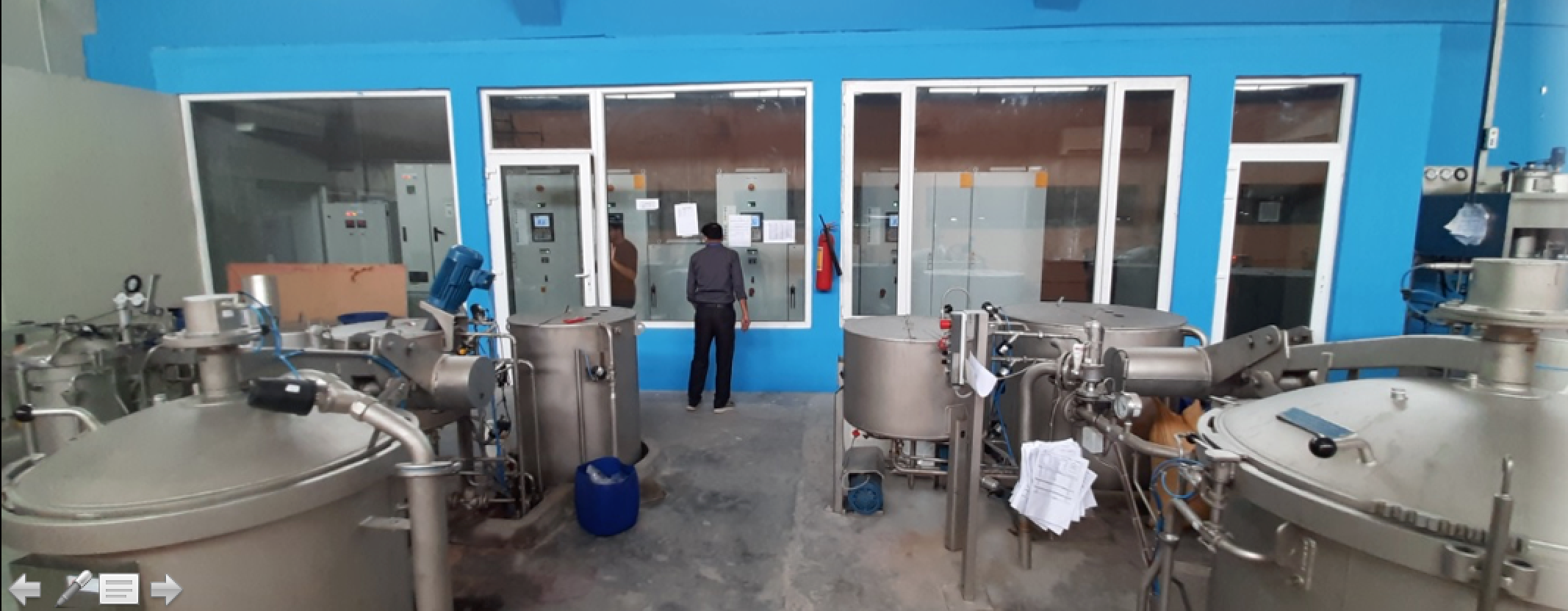
Cone dyed yarn—also called package dyed yarn—is wound onto perforated tubes and dyed inside a pressurised machine. Liquor circulates through the package in alternating directions so the inner, middle and outer yarn layers receive controlled colour penetration.
What the term means
“Cone dyed” describes the colouration stage and package format. It does not by itself confirm fibre, count, ply, dye class, colourfastness or machine suitability.
How the package works
Grey yarn is soft-wound onto a perforated cylindrical or slightly conical support. Controlled density lets liquor flow through the yarn without channeling or blocked areas.
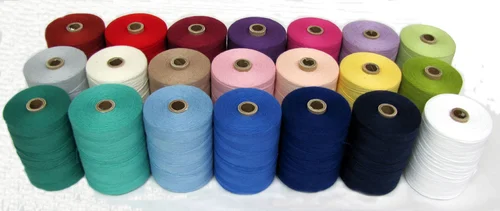
Custom Cone-Dyed Colours
Solid shades can be developed against the buyer’s approved physical reference, PANTONE colour reference or agreed spectral target.
Explore the dyed yarn rangeThe Cone Dyeing Process
A controlled production sequence that develops colour through the full yarn package.
Package Preparation
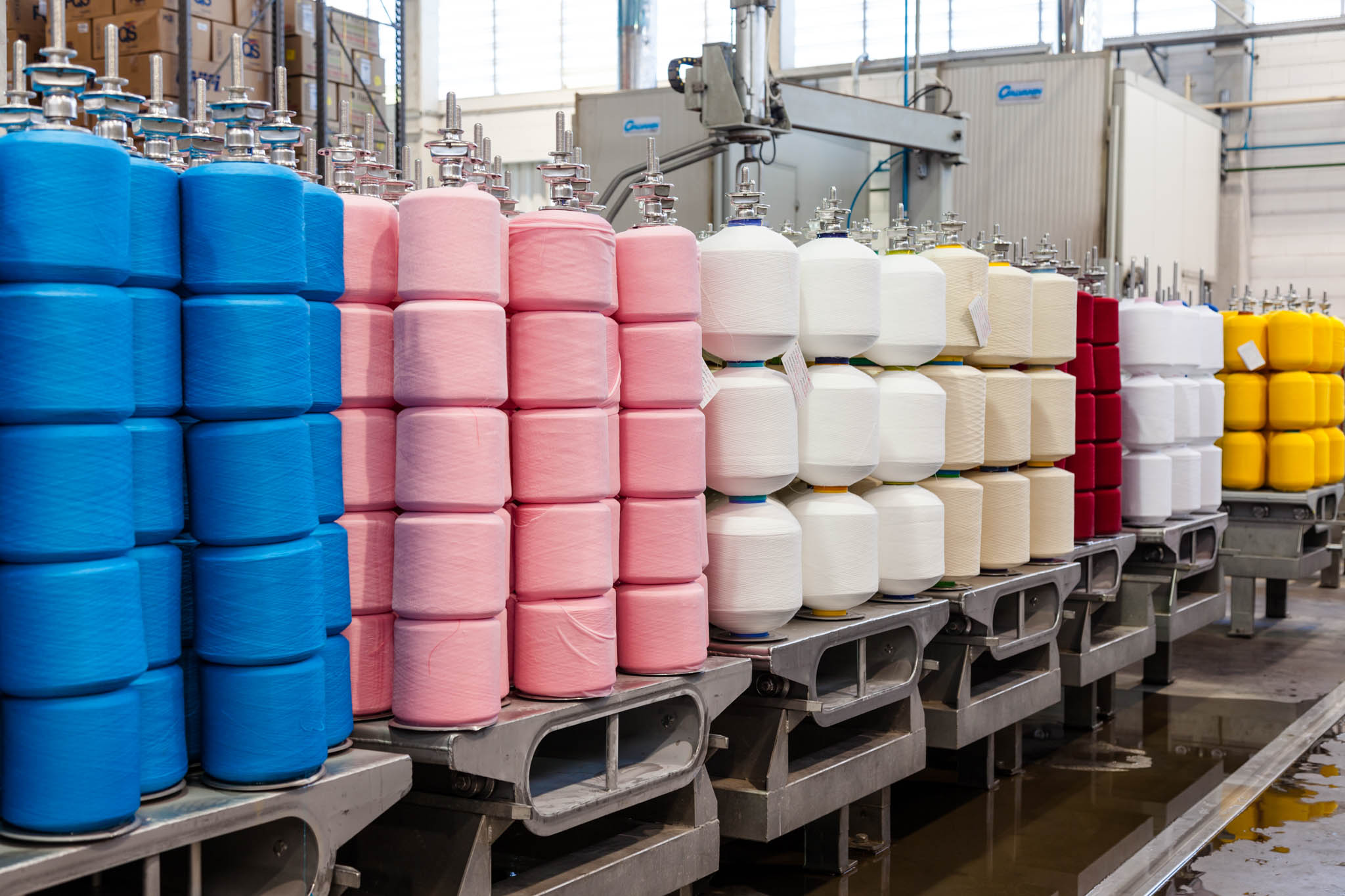
Confirm fibre, count, ply and lot identity, then soft-wind grey yarn onto perforated dye tubes at a controlled and repeatable density.
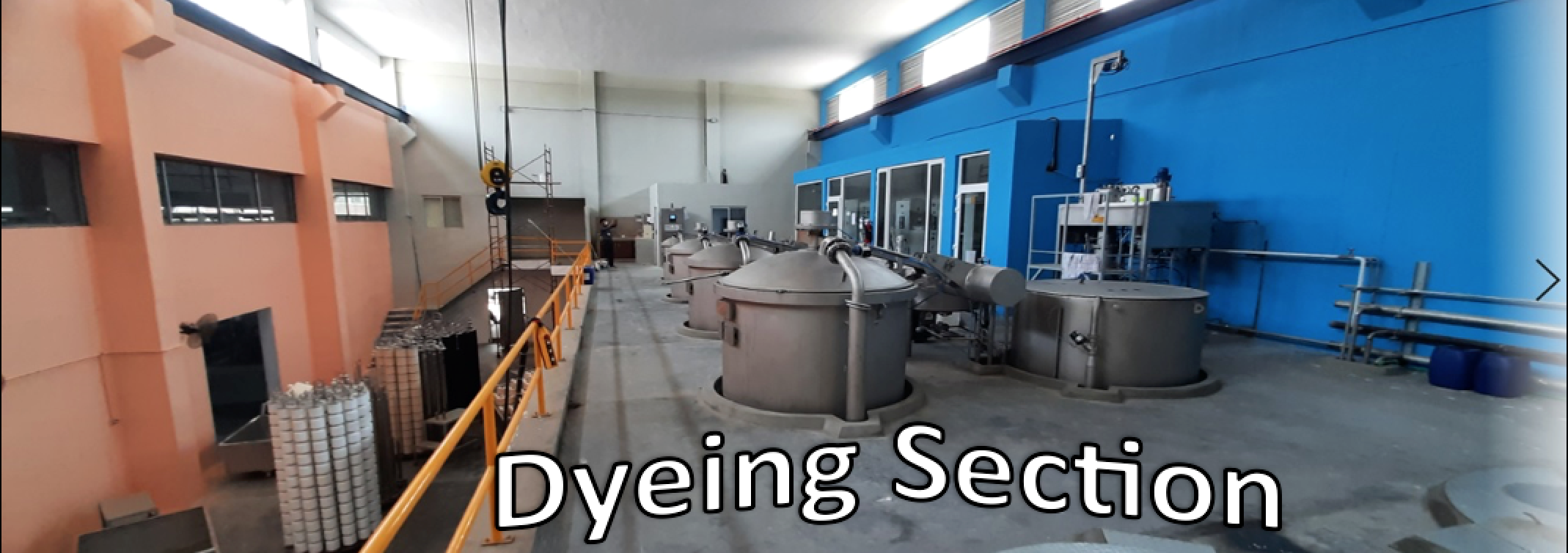
Carrier Loading and Circulation
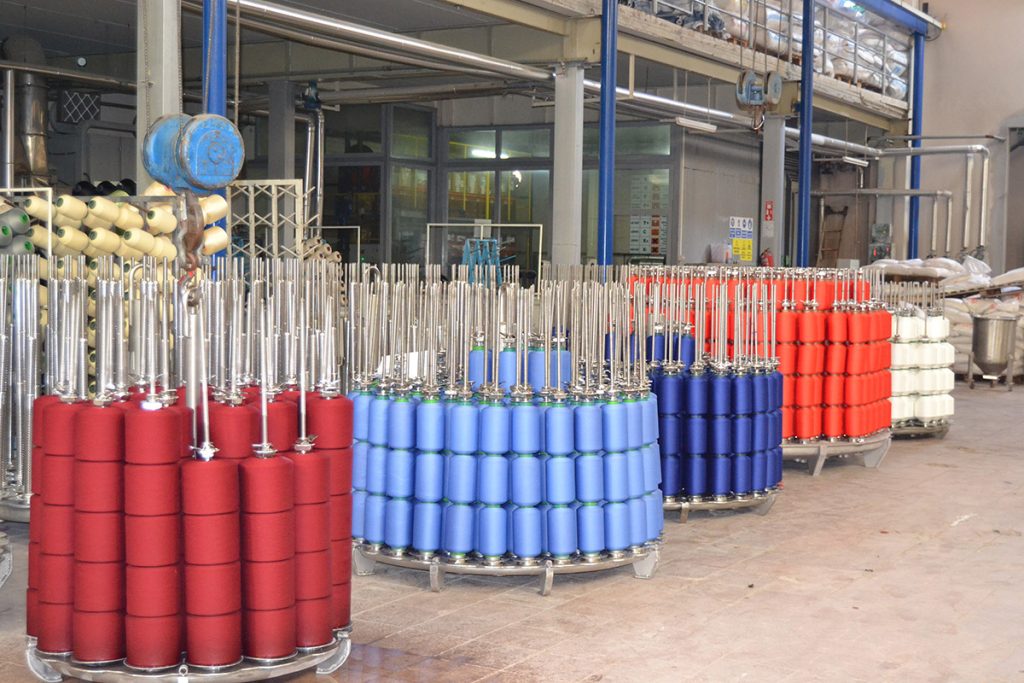
Packages are stacked on perforated spindles, sealed into the flow path and loaded inside the dye vessel. Pumps circulate liquor from inside out and outside in.
Pretreatment, Dyeing and Fixation
Scouring or other fibre-specific preparation is followed by controlled dye addition, temperature, pH, flow, time and fixation conditions.
Washing and Neutralisation
After fixation, the yarn is rinsed and washed to remove unfixed dye and residual chemicals. The exact route depends on fibre and dye class.
Drying and Conditioning
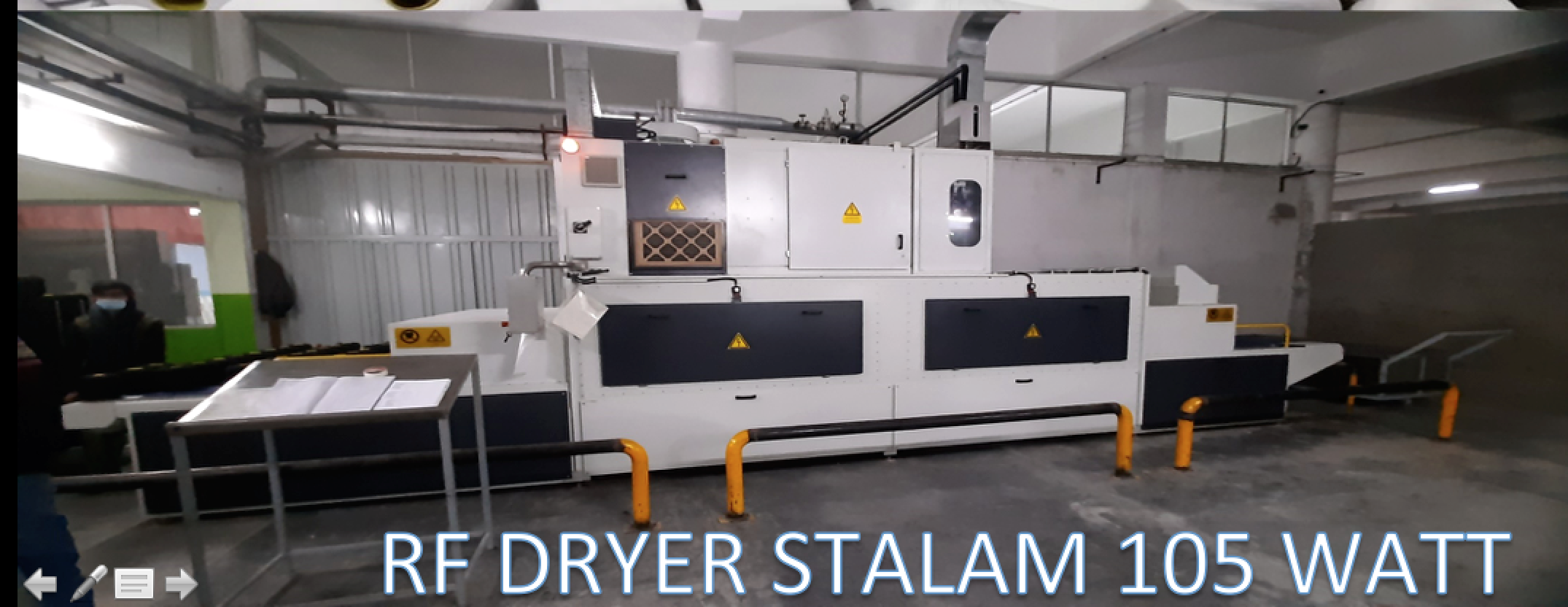
Packages are hydro-extracted, dried and conditioned without damaging yarn strength, elongation, handle, shade or package stability.
Rewinding and Quality Checks
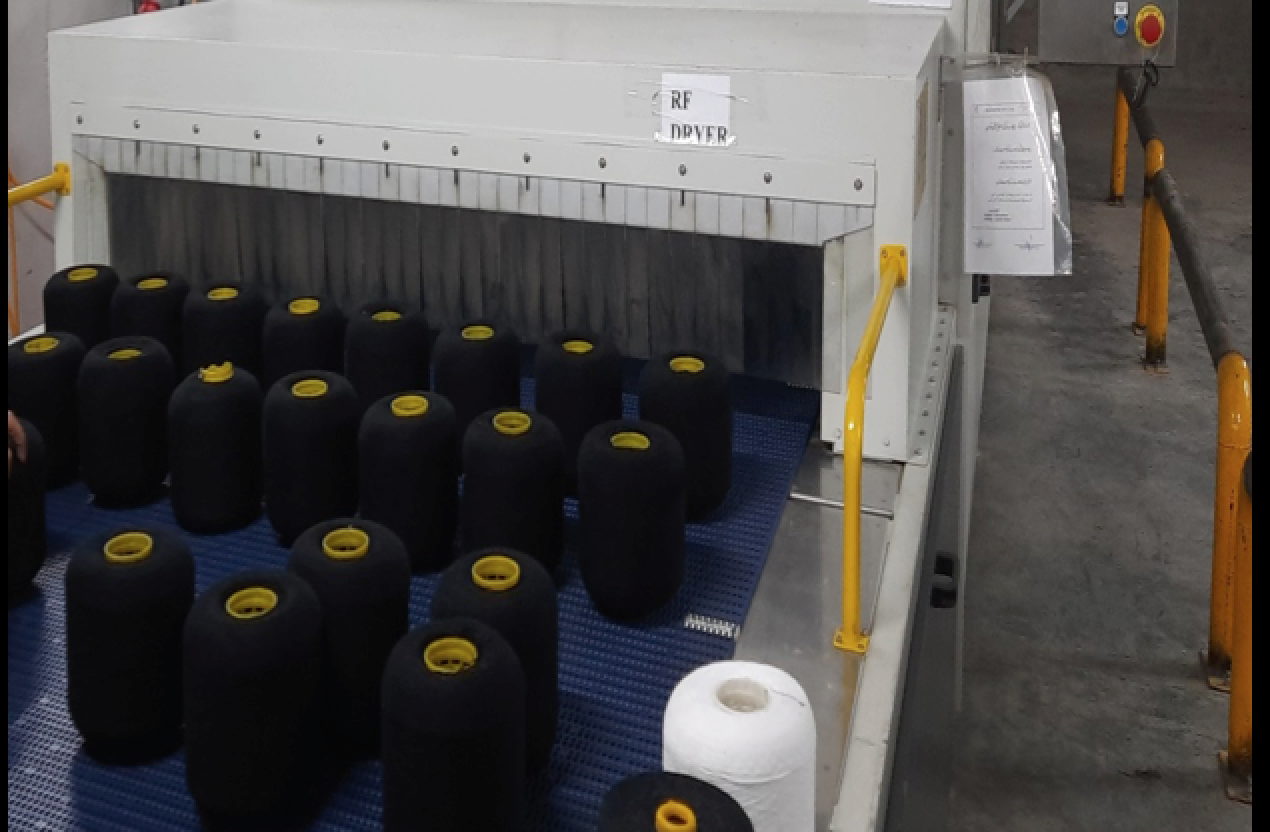
Yarn is rewound onto production cones, inspected and checked for shade, package variation, fastness, physical properties, cone weight and unwinding.
“Controlled liquor flow and package density are essential for uniform colour penetration through the cone.”
Benefits and Limitations of Cone Dyed Yarn
Why manufacturers use package dyeing—and what still requires approval.
Solid-Colour Supply
Yarn arrives in the required shade before fabric conversion.
Design Flexibility
Different colours can form stripes, checks, ribs and jacquards.
Commercial Scale
Multiple packages can be processed as one traceable dye lot.
Repeat Potential
Retained standards and approved recipes support repeat orders.
Multiple Fibres
The route can serve cotton and other fibres with suitable chemistry.
Production Packages
Yarn is rewound to a specified cone for knitting or weaving.
Important limitation: inconsistent winding density, liquor flow, loading or preparation can cause inner-to-outer and package-to-package shade variation.
View quality controlWhich Dyes Are Used?
Reactive dyes are widely used for cotton; vat or other systems can suit selected requirements. Polyester commonly uses disperse dyes, wool and nylon use fibre-appropriate acid or related systems, and acrylic commonly uses basic or cationic dyes. Blends require a compatible one-bath or multi-stage route.
Compare Abtex’s 100% cotton combed yarn as a grey base with its commercial cone dyed cotton yarn range.
| Colouration method | When colour is applied | Main advantage | Main consideration |
|---|---|---|---|
| Cone/package dyeing | After spinning, before fabric formation | Commercial solid-colour yarn for knitting and weaving | Package density, penetration and lot control |
| Hank dyeing | Yarn in loose hank form | Selected soft-handle and speciality yarns | Handling, labour and productivity |
| Fibre dyeing | Loose fibre before spinning | Mélange and heather effects | Inventory and fibre-to-yarn shade control |
| Piece dyeing | After knitting or weaving | Efficient solid-colour fabric production | Cannot place separate yarn colours in one structure |
| Garment dyeing | After garment assembly | Garment-level effects and flexible colour decisions | Trim, seam and shrinkage compatibility |
Made for Real-World Textile Applications
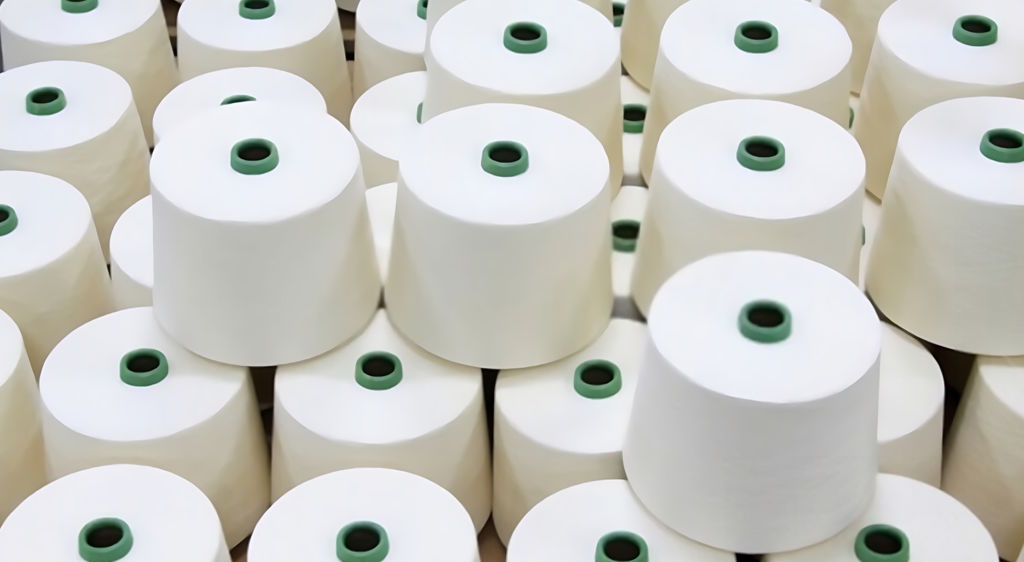
The correct fibre, count, ply, twist and package must still match the intended machine and product.
 Knitting
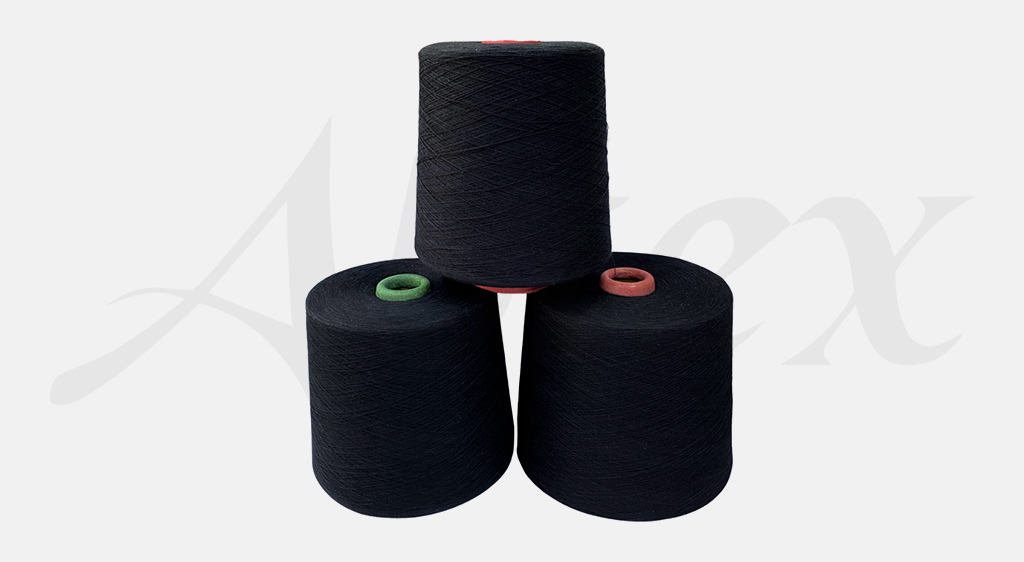
 Weaving
 Socks
Socks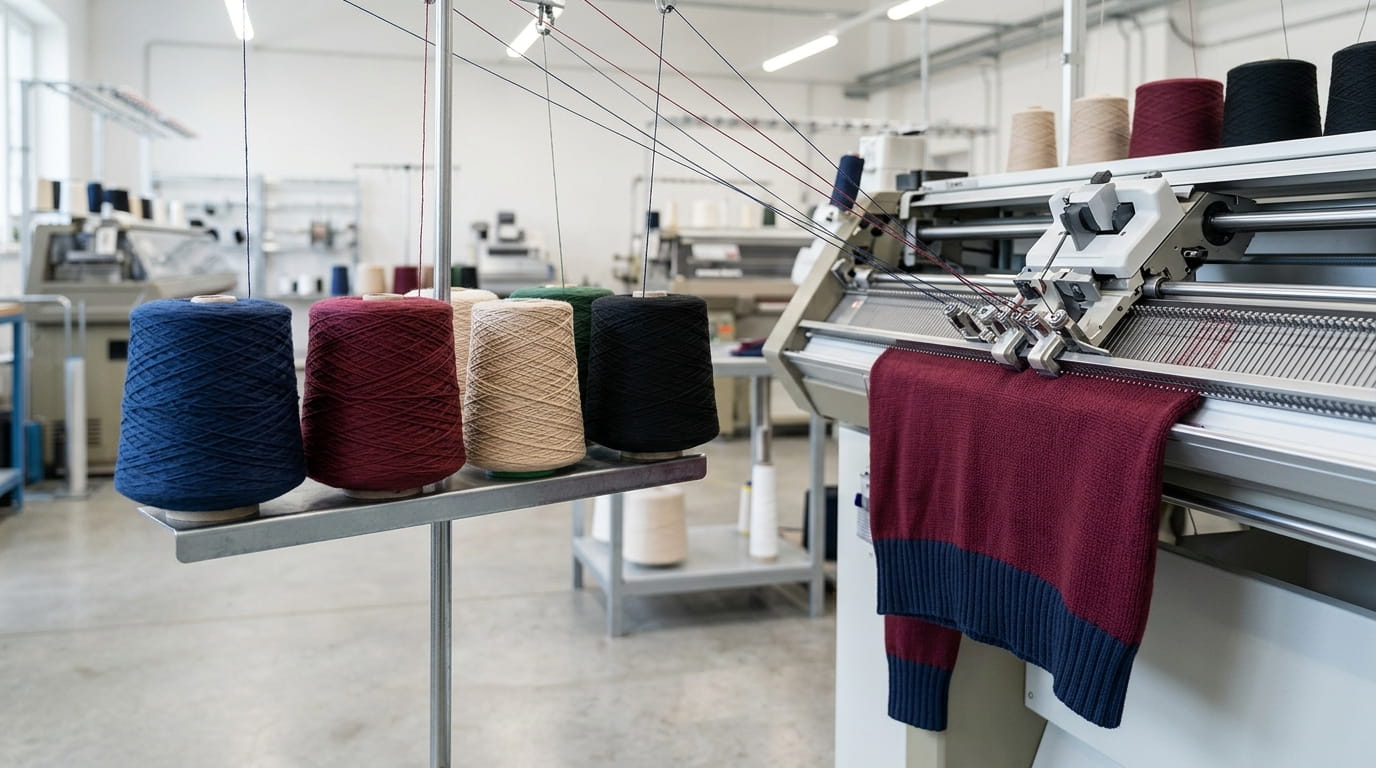 Sweaters
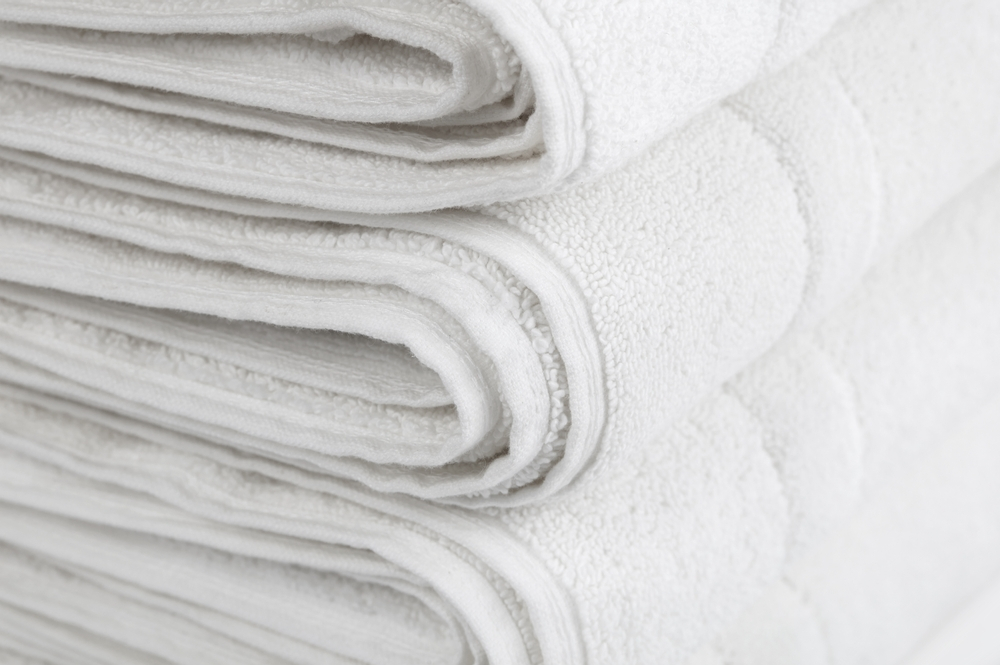 Towels
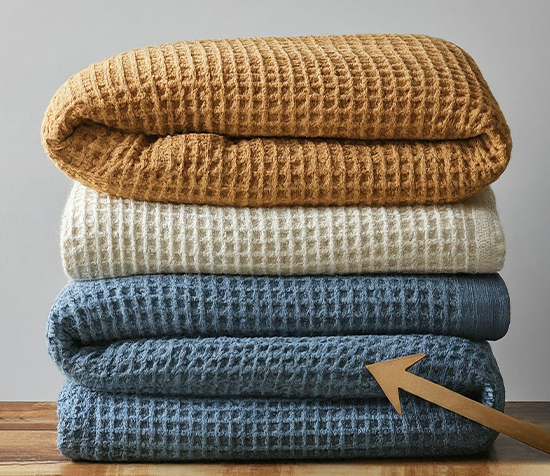 Home Textiles
For sweater-specific sourcing, read how to choose a dyed yarn supplier for sweater manufacturing.
Buyer Checklist: What to Specify
A complete enquiry lets suppliers develop the right yarn, shade and commercial offer.
| Parameter | What to provide | Why it matters |
|---|---|---|
| Fibre | Exact cotton, polyester, wool, acrylic or blend percentage | Determines dye chemistry and end-use behaviour |
| Preparation | Carded, combed, compact or other spinning requirement | Affects cleanliness, hairiness, strength and appearance |
| Count and ply | Ne, Nm or denier system and resultant construction | Controls fabric weight, handle and machine compatibility |
| Twist | Required twist level and direction where critical | Affects strength, appearance and processing |
| Colour standard | Physical swatch, PANTONE reference or spectral target | Creates a measurable shade approval |
| Tolerance | Light sources and agreed instrumental tolerance | Controls bulk and repeat-lot consistency |
| Fastness | Test method, condition and minimum grade | Defines wash, rubbing, light or perspiration performance |
| Machine and product | Gauge, loom, fabric construction and finished use | Connects yarn specification to production performance |
| Cone format | Tube, dimensions, weight, density and unwinding direction | Affects dye penetration, machine running and logistics |
| Commercial details | Quantity per shade, packing, destination and Incoterm | Defines MOQ, lead time, price and shipment planning |
Approve the shade against a lab dip and agreed tolerance, then confirm representative cones and a production trial before bulk use.
Request a lab dipTesting and Quality Control
Typical controls include shade under agreed lighting, instrumental colour difference, inner-middle-outer package checks, package-to-package variation, wash and rubbing fastness, count, twist, tensile properties, elongation, evenness, hairiness, cone weight and unwinding.
ISO 105-C06:2010 covers colourfastness to domestic and commercial laundering, while ISO 105-X12:2016 covers dry and wet rubbing assessment.
Review package density, flow direction, loading and process conditions.
Review fixation, washing-off and the required fastness grade.
Keep shade and physical-yarn lots traceable and segregated.
Control cone build, hardness, weight and rewinding tension.
Frequently Asked Questions
What is cone dyed yarn?
It is yarn coloured on a permeable wound package before knitting or weaving. Dye liquor circulates through the package under controlled conditions.
Is cone dyed yarn the same as package dyed yarn?
Yes. Cone dyeing is a common commercial term for package dyeing, although the actual dye package may be cylindrical or slightly conical.
How is cone dyed yarn produced?
Grey yarn is soft-wound on perforated tubes, loaded into a pressure vessel, pretreated, dyed, fixed, washed, dried, conditioned, rewound and tested.
Which dyes are used for cone dyed cotton yarn?
Reactive dyes are widely used for cotton. Vat and other systems may suit selected shades, performance requirements or buyer specifications.
What causes uneven cone dyeing?
Common causes include inconsistent package density, poor liquor distribution, channeling, raw-yarn variation, preparation differences and uncontrolled process conditions.
Is cone dyed yarn suitable for sweaters and socks?
Yes. Fibre, count, ply, twist, shade, fastness and cone format must be selected for the intended machine and approved through a representative trial.
What information is needed for a quotation?
Provide fibre, preparation, count, ply, shade reference, quantity per shade, fastness, end use, machine, cone details, packing, destination and Incoterm.
Request a Lab Dip or Cone Dyed Yarn Quotation
Share your fibre, count, ply, shade reference, quantity per colour, fastness, machine or end use, cone specification, packing and destination.