Fabric Knowledge Guide
What Is Dyed Poplin Fabric?
Understand poplin construction, piece dyeing, fibre options, applications and the specifications textile buyers should confirm before bulk production.
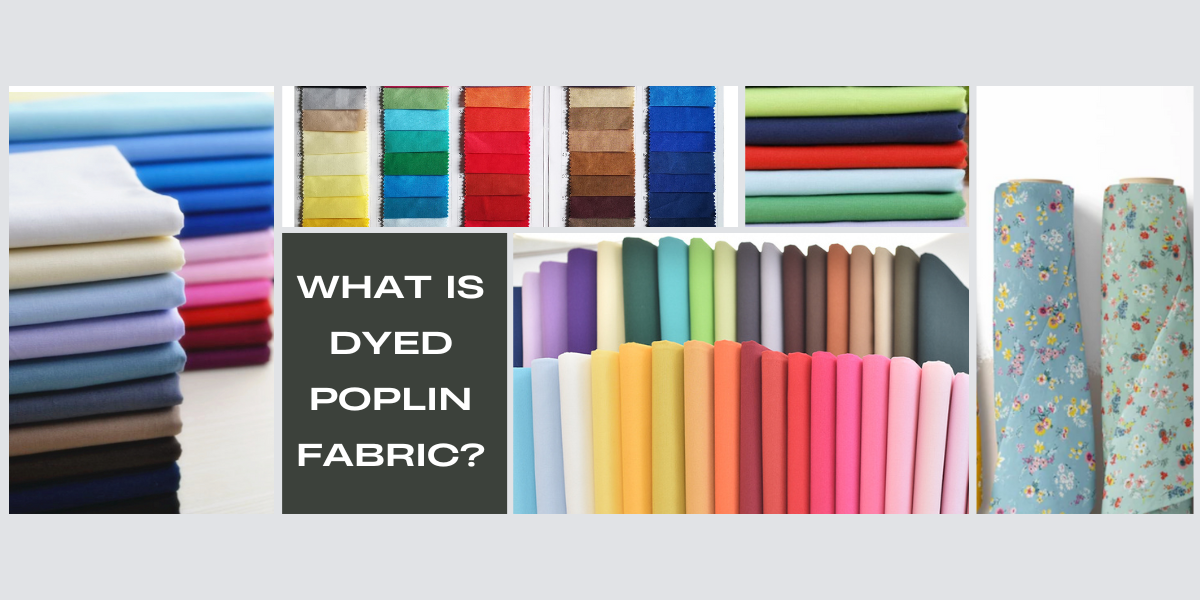
Dyed poplin fabric is a smooth, tightly woven plain-weave fabric that is coloured after weaving, usually through a piece-dyeing process. Poplin can be produced from 100% cotton, polyester-cotton, CVC, or stretch blends and is widely used for shirts, uniforms, dresses, linings, pocketing, children’s wear, and other lightweight garments.
Dyed poplin is a plain-weave fabric that has been dyed in a solid colour after weaving. It has a smooth surface, stable construction, and crisp appearance. The exact softness, weight, breathability, strength, and colourfastness depend on the fibre composition, yarn count, construction, dyeing method, and finishing process.
What Is Dyed Poplin Fabric?
Poplin describes a plain-weave construction rather than a particular fibre. The warp and weft yarns interlace in a simple over-one, under-one pattern, producing a balanced surface with a fine crosswise rib. The completed grey poplin is then prepared and dyed to create a uniform solid colour.
The appearance and performance of material supplied by a dyed fabric supplier in Pakistan depend on the yarn count, thread density, composition, GSM, dye class and finishing route. Two fabrics may both be described as poplin while having different weight, strength, hand feel and end-use suitability.
How Is Dyed Poplin Fabric Made?
Dyed poplin production normally begins with woven grey fabric and continues through preparation, dyeing, finishing and quality inspection. The exact process is adjusted to the fibre composition, shade and performance specification.
Grey Fabric Preparation
The required poplin construction is first woven as grey fabric. The mill checks the construction, width and visible weaving quality before wet processing. Where applicable, buyers may also source prepared-for-dyeing fabric for later colour development.
Scouring and Bleaching
The grey fabric is prepared to remove natural waxes, oils, size and other impurities that could interfere with even dye absorption. Bleaching may be used when a cleaner and more uniform base is required, especially for pale or bright shades.
Dyeing and Colour Fixation
The prepared fabric is dyed to the approved colour standard using a dye class and recipe suitable for the fibre composition. The process must control temperature, time, chemical conditions and fabric movement. Colour fixation helps the dye bond correctly with the fibre and achieve the required performance.
Washing and Finishing
After dyeing, the fabric is washed to remove unfixed dye and processing residue. Finishing can then be used to control width, shrinkage, hand feel, surface appearance and other buyer requirements. Special treatments may be added where technically suitable.
Inspection and Testing
Finished fabric should be inspected for shade consistency, width, GSM, visible defects, bow or skew and packing quality. Testing may include wash fastness, rubbing fastness, shrinkage, tensile or tear strength and other performance requirements agreed with the buyer.
Key Properties of Dyed Poplin Fabric
Smooth Surface
The plain-weave structure produces a clean and balanced appearance suitable for garment panels, collars, cuffs and other visible components.
Stable Construction
A suitable yarn count and thread density can provide dependable dimensional stability and sewing performance for lightweight garment production.
Crisp or Soft Handle
The final hand feel can range from crisp to soft depending on the composition, construction and finishing method specified by the buyer.
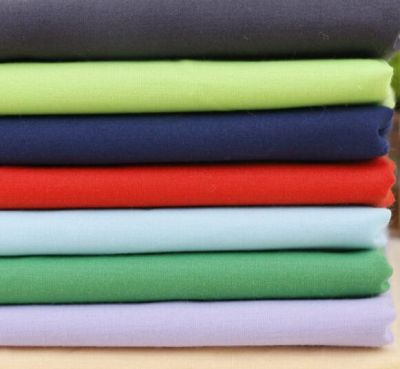
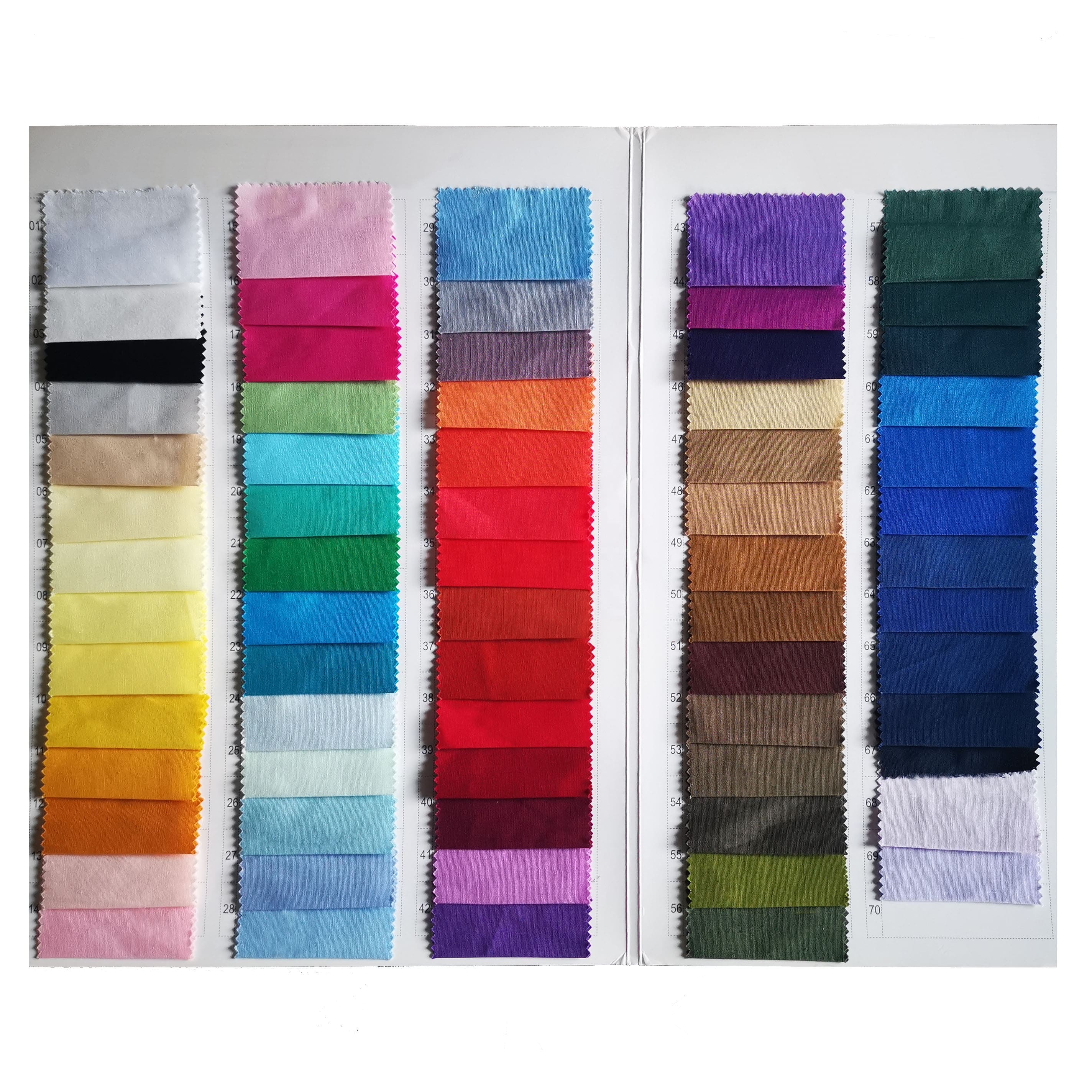
Solid Colour Flexibility
Piece dyeing allows grey poplin to be developed in approved solid colours, subject to lab-dip approval and commercial dye-lot requirements.
Types of Dyed Poplin Fabric
100% Cotton Dyed Poplin
Cotton poplin is valued for breathability, absorbency and comfort. It is commonly used for shirts, blouses, dresses and children’s wear. Shrinkage and colourfastness requirements should be confirmed before production.
Polyester-Cotton Dyed Poplin
Polyester-cotton poplin combines cotton comfort with polyester’s dimensional stability, quicker drying and easier-care characteristics. It is commonly considered for uniforms, corporate clothing and institutional programmes.
CVC Dyed Poplin
CVC poplin contains a higher proportion of cotton than polyester. It can provide a cotton-rich hand feel while retaining selected performance advantages associated with a blended construction.
Stretch Dyed Poplin
Stretch poplin contains elastane or spandex to improve movement and recovery. It is used for fitted shirts, dresses, skirts and other garments requiring additional flexibility.
Functionally Finished Poplin
Where technically suitable, poplin can be developed with finishes for specific performance requirements. Buyers should identify the intended function, applicable test method and required result rather than requesting a finish by name alone.
Common GSM and Width Options
Poplin is available in lightweight and medium-weight constructions depending on the intended garment. Lightweight qualities are commonly considered for summer clothing and linings, while medium-weight qualities are more suitable for shirts, uniforms and applications requiring additional body.
Finished width depends on the loom, processing route and buyer requirement. GSM and width should be selected together with the fibre composition, yarn count, thread density, shrinkage tolerance and end use. Contact Abtex International for currently available qualities and custom-development options.
Common Uses of Dyed Poplin Fabric
- Dress shirts and casual shirts
- Uniform shirts and corporate clothing
- School and hospitality uniforms
- Blouses, dresses and skirts
- Children’s wear
- Garment linings
- Pocket bags and pocketing fabric
- Lightweight work shirts
Dyed Poplin Fabric vs Twill Fabric
| Buying factor | Dyed poplin | Twill |
|---|---|---|
| Weave structure | Plain weave with a smooth, balanced surface | Diagonal weave with visible ribs |
| Typical handle | Lightweight and crisp to soft depending on finish | More structured, flexible and substantial |
| Common uses | Shirts, blouses, dresses, uniforms, linings and pocketing | Trousers, industrial workwear, jackets, uniforms, bags and upholstery |
| Selection priority | Clean appearance, comfort, breathability and easy sewing | Durability, drape, strength and heavier construction |
Poplin normally has a plain-weave construction with a smooth and balanced surface. In comparison, twill fabric has visible diagonal ribs and is generally selected where greater durability, flexibility or a heavier construction is required.
Dyed Poplin Fabric vs Printed Poplin Fabric
| Factor | Dyed poplin | Printed poplin |
|---|---|---|
| Appearance | Normally a uniform solid colour | Patterns, motifs or multicolour designs on the fabric surface |
| Process | Colour is applied through a suitable dyeing process | Design is applied through rotary, flatbed, digital or another printing method |
| Development | Requires colour reference and lab-dip approval | Requires artwork, colour separation or digital-file approval |
| Typical use | Solid shirts, uniforms, dresses and linings | Fashion garments, children’s wear and decorative applications |
Buyers requiring patterns or motifs can review Abtex’s printed fabric options.
What Buyers Should Specify Before Ordering
Before requesting a quotation or sample, buyers should provide the following information:
- Fibre composition
- Yarn count
- Thread construction or density
- Required GSM
- Finished fabric width
- Required colour or Pantone reference
- Dyeing method or colourfastness requirement
- Shrinkage tolerance
- Required hand feel
- Special finishing requirements
- Testing standard
- Order quantity
- Packing method
- Destination and shipment terms
If the buyer is deciding whether a colour or pattern should be built into the textile using previously coloured yarns or applied after fabric construction, our guide to yarn-dyed fabric versus piece-dyed fabric explains the main commercial and technical differences.
Why Source Dyed Poplin Fabric from Abtex International?
Abtex International works as a fabric supplier for buyers sourcing woven fabrics from Pakistan. Our broader range includes grey, PFD, dyed, printed and application-specific fabrics. Custom composition, construction, GSM, width, shade and finishing requirements can be reviewed according to the buyer’s intended garment and performance specification.
Buyers can contact the Abtex team for available qualities, technical information, lab-dip and sample procedures, minimum order quantities, pricing, packing and export terms.
Frequently Asked Questions
Is poplin fabric always made from cotton?
No. Poplin describes the weave construction rather than the fibre. It can be made from 100% cotton, polyester, polyester-cotton, CVC, viscose blends, or fabrics containing elastane for stretch.
What is the difference between dyed poplin and printed poplin?
Dyed poplin normally has a uniform solid colour applied through a dyeing process. Printed poplin has patterns, motifs, or designs applied to the fabric surface through rotary, flatbed, digital, or another printing method.
Is dyed poplin suitable for uniforms?
Yes. Dyed poplin is commonly used for uniform shirts, hospitality uniforms, corporate clothing, school uniforms, and lightweight work shirts. For heavier trousers, jackets, or industrial workwear, twill or drill fabric may be more suitable.
Does dyed poplin fabric shrink?
Shrinkage depends on the fibre composition, construction, dyeing process, and finishing method. Cotton poplin can shrink if it is not properly finished. Buyers should specify their required shrinkage tolerance and request testing before bulk production.
Can poplin fabric be made with stretch?
Yes. Stretch poplin can be produced by adding elastane or spandex to cotton, CVC, or polyester-cotton constructions. It is commonly used for fitted shirts, dresses, skirts, and other garments requiring improved movement and recovery.
What GSM is suitable for poplin fabric?
The suitable GSM depends on the application. Lightweight qualities are used for summer clothing and linings, while medium-weight qualities are commonly used for shirts and uniforms. Buyers should select the GSM together with the composition, yarn count, thread density, and required end use.
What is the difference between poplin and twill fabric?
Poplin normally has a plain-weave construction with a smooth and balanced surface. Twill has visible diagonal ribs and is generally selected where greater durability, flexibility, or a heavier construction is required.
Can Abtex supply custom colours in dyed poplin fabric?
Yes. Abtex International can arrange custom colour development according to the buyer’s colour reference or Pantone specification. Lab-dip approval should be completed before bulk dyeing.
Source Dyed Poplin Fabric from Pakistan
Abtex International (Pvt.) Ltd. supplies dyed poplin fabric in 100% cotton, polyester-cotton, CVC, and stretch compositions for shirts, uniforms, dresses, pocketing, linings, and other garment applications.
Custom constructions, GSM, widths, colours, and finishing requirements can be developed according to the buyer’s specifications.
Contact our team for available qualities, technical specifications, lab dips, samples, minimum order quantities, pricing, and export terms.