
Fabric Knowledge Guide
What Is Twill Fabric?
Learn how the diagonal twill weave is constructed, which twill fabrics suit different applications, and what buyers should specify before placing an order.
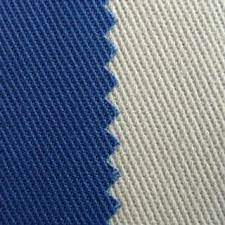
Twill fabric is a woven textile identified by diagonal ribs or lines across its surface. These lines are created by passing each weft yarn over and under two or more warp yarns, then shifting the interlacing point in the next row. The result is a fabric that is generally durable, flexible and well suited to clothing, uniforms, workwear, bags, upholstery and home-textile applications.
Twill is a weave structure, not a single fibre or product. It can be woven from cotton, polyester, poly-cotton and other yarns, then supplied as grey fabric, prepared-for-dyeing fabric, or finished dyed fabric according to the buyer’s end use.
How Is Twill Fabric Made?
In a basic plain weave, yarns alternate over one and under one. A twill weave uses a stepped interlacing sequence—for example, over two and under one. Moving that sequence by one yarn in every row produces the characteristic diagonal line. The direction and angle of the line depend on the weave plan, yarn count, thread density and finishing process.
Because the yarns interlace less frequently than in a comparable plain weave, twill can provide good drape and flexibility while retaining strength. The structure also tends to conceal small stains and creases better than a smooth plain-weave surface, which is one reason twill is widely used for uniforms and everyday garments.
Twill, Plain Weave and Satin: What Is the Difference?
| Weave | Surface appearance | Typical characteristics | Common uses |
|---|---|---|---|
| Twill | Visible diagonal ribs | Durable, flexible, good drape | Workwear, trousers, uniforms, denim, bags |
| Plain weave | Even, balanced surface | Stable, crisp and straightforward construction | Shirting, poplin, pocketing, sheeting |
| Satin weave | Smooth, lustrous face | Soft hand and high surface sheen | Linings, fashion garments, decorative textiles |
Common Types of Twill Fabric
The term “twill” covers a family of constructions. Selecting the right type depends on the required weight, strength, appearance, hand feel and finishing route.
Denim
A strong cotton twill normally woven with coloured warp yarns and lighter weft yarns. It is widely used for jeans, jackets, aprons and durable accessories.
Herringbone
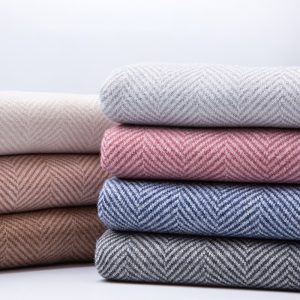
The diagonal direction reverses at regular intervals, producing a V or chevron effect used in jackets, uniforms, upholstery and decorative fabrics.
Gabardine
A tightly woven twill with a clean surface and defined diagonal line. It is commonly selected for trousers, suits, outerwear and uniforms.
Drill
A robust twill construction used for workwear, industrial uniforms, utility clothing, bags and other products that require dependable wear resistance.
Cavalry Twill
A heavier construction with pronounced double diagonal lines, traditionally used for riding wear, structured trousers and uniform applications.
Satin Twill
A twill-derived construction developed for a smoother appearance and softer hand, depending on the fibre, yarn and finishing specification.
Fibres, Colours and Finishing Options
Twill fabric can be developed in different fibre compositions. Cotton twill is valued for comfort and absorbency; polyester can contribute dimensional stability and quicker drying; and poly-cotton blends can balance comfort, strength and commercial requirements. The correct composition should always be selected against the final product and required testing standards.
Abtex International can discuss twill programmes in unfinished grey and dyed forms based on buyer requirements. Buyers can explore our wider fabric range, including printed fabric, PFD fabric and durable judo fabric.
Where Is Twill Fabric Used?
Twill’s combination of structure, drape and durability makes it suitable for a broad range of textile products:
- Workwear and industrial uniforms
- Trousers, chinos, jackets and overshirts
- Martial-arts and sports uniforms
- Aprons, tote bags and utility products
- Upholstery and decorative textiles
- Home-textile and institutional applications
For demanding uniform applications, construction alone is not enough. Fabric weight, tensile and tear strength, shrinkage, colour fastness, dimensional stability and finishing must all be agreed before bulk production.
What Buyers Should Specify When Sourcing Twill
A complete enquiry helps the manufacturer develop the right fabric and quote accurately. Buyers should provide as much of the following information as possible:
- Fibre composition or permitted blend
- Finished fabric weight or GSM
- Required width and usable width
- Colour standard, Pantone or physical swatch
- End use and garment type
- Required weave or reference sample
- Performance and fastness requirements
- Finishing, packing and shipment details
Where a physical reference is available, it should be evaluated together with the buyer’s performance requirements. Two fabrics may look similar but behave differently after dyeing, washing or garment construction.
Care and Performance
There is no single care instruction for every twill fabric. Washing and drying recommendations depend on fibre content, colour, fabric weight and applied finishes. Cotton-rich twills may require shrinkage control, while blended fabrics may be selected where dimensional stability and easy maintenance are priorities. Garment manufacturers should confirm care-label instructions through testing of the approved finished fabric.
Frequently Asked Questions
Is twill a fabric or a weave?
Twill is primarily a weave structure. Different yarns and fibres can be woven in a twill construction to create fabrics such as denim, drill, gabardine and herringbone.
Is twill fabric always made from cotton?
No. Twill can be woven from cotton, polyester, poly-cotton and other fibre compositions. The most appropriate composition depends on the required comfort, strength, appearance, care and price.
Is twill fabric suitable for workwear?
Yes. Drill and other durable twill constructions are widely used for workwear and uniforms. Buyers should specify the required GSM, strength, shrinkage, colour fastness and finishing standards.
Can twill fabric be supplied dyed or unfinished?
Yes. Depending on the programme and specification, twill may be supplied as unfinished grey fabric, prepared for further processing, or dyed to an approved colour standard.
What information is needed for a twill fabric quotation?
Provide the composition, GSM, width, colour, construction or reference sample, end use, performance requirements, quantity, packing and delivery destination.
Discuss Your Twill Fabric Requirement
Share your composition, weight, width, colour, end use and quantity with Abtex International for development review and a commercial quotation.
Request a Fabric Quotation