Recycled Fibre Explained
Recycled Wool Yarn: From Post-Consumer Sweaters to Spun Cone
The full production route for recycled wool blended yarn — what the input material actually is, what happens to the fibre mechanically, and what that means for the yarn you receive.
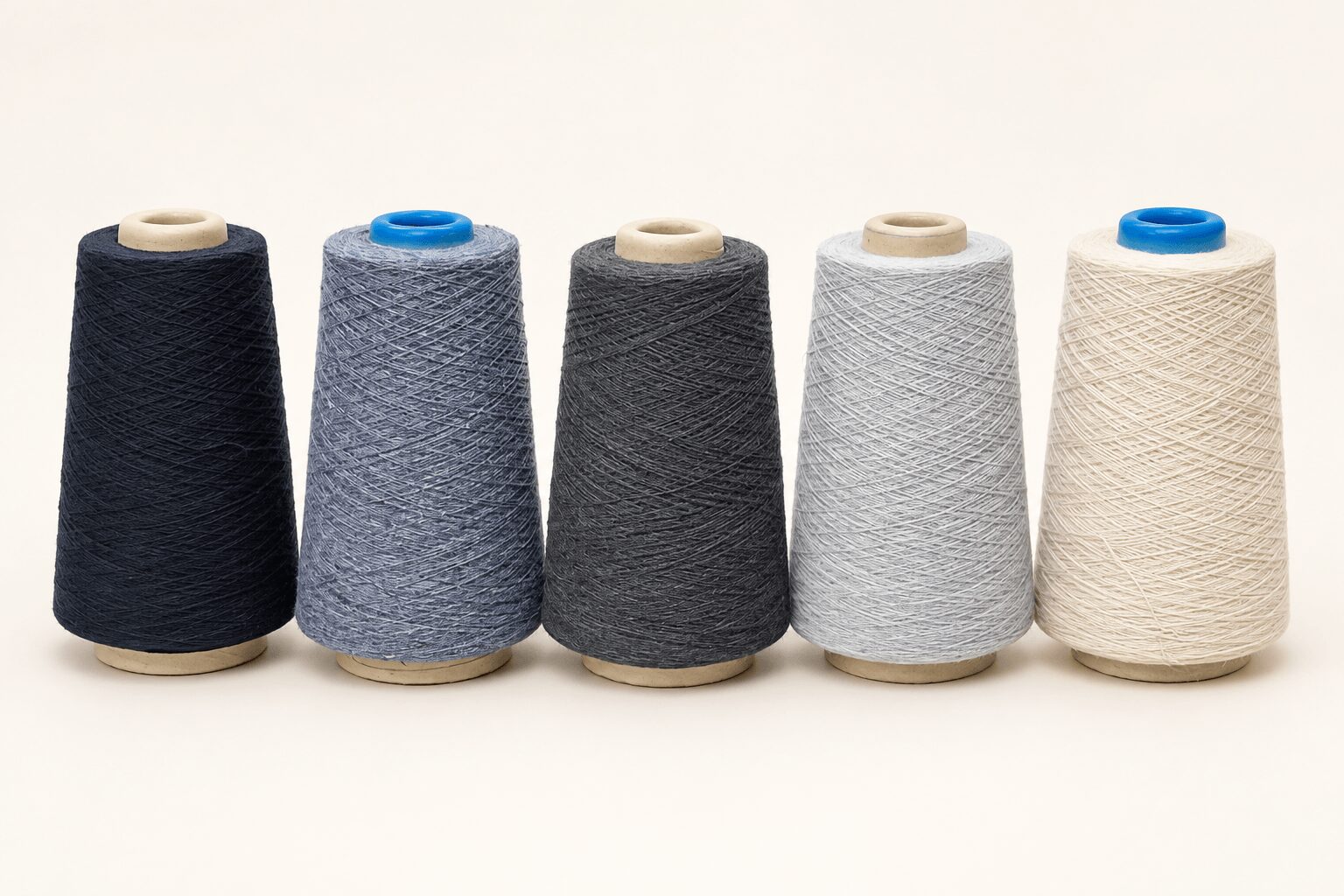
Recycled wool yarn is produced through a different route from virgin wool yarn, so buyers need to understand the fibre input, colour sorting, mechanical recovery and re-blending stages before approving bulk. Abtex International’s recycled wool blended yarn range is developed around these process realities rather than treated like a conventional dyed yarn.
This yarn is not a marketing reclassification of virgin wool. It is a genuinely different material with a different production route, different fibre properties and different commercial behaviour. Buyers who understand the process specify better and get fewer surprises at bulk.
This article walks through the route from a bale of used sweaters to a spun cone, and explains why support fibres are used in many recycled wool knitting yarns.
How recycled wool yarn is made: Step 1 — collection and grading
The input is post-consumer knitwear — sweaters, cardigans and knitted garments that have reached the end of their first life. These arrive in mixed bales from collection and sorting operations.
The first operation is grading. Garments are separated by fibre content, because a sweater that is 100% wool, one that is 70/30 wool-acrylic and one that is pure acrylic will all behave differently once pulled. Hardware — zips, buttons, labels, trims, seams — is removed at this stage. Anything left in the material will show up later as neps, contamination or a machine stoppage.
This is manual, labour-intensive work, and it is the single biggest determinant of final yarn quality. Consistency is only as strong as the sorting discipline behind it.
Step 2: Colour sorting
After fibre grading, garments are sorted by colour into shade families: navies, greys, charcoals, blacks, rusts, ecrus, and so on.
This step exists for a specific commercial reason. The recovered material is usually not re-dyed. Instead, colour is built at the fibre stage by sorting and then blending pre-coloured fibre to hit a target shade. Where no additional dyeing is needed, this can reduce dyeing inputs; actual savings depend on the production route. This approach and produces the characteristic depth and slight melange character of recycled wool yarns.
The trade-off is that shade matching works differently. You are not matching a Pantone reference with a dye recipe; you are matching a blended fibre lay-down against an approved physical standard. Shade bands and agreed tolerances matter more here than in a conventionally dyed yarn.
Step 3: Pulling and garnetting
Sorted garments are fed into a pulling or garnetting machine — a series of rotating cylinders covered in steel pins or saw-tooth wire that mechanically tear the knitted structure back into loose fibre.
Mechanical opening can shorten fibres and widen their length distribution. The result depends on feedstock and processing; assess the recovered fibre and spun yarn rather than assuming a fixed retained length.
Two traditional trade terms describe the output:
- Shoddy — fibre recovered from loosely constructed knitted or woven goods. The structure opens relatively easily, so fibre length is better preserved and the resulting material is the more valuable of the two.
- Mungo — fibre recovered from hard, felted or heavily milled fabrics. These resist pulling, so the fibre comes out significantly shorter and is used in coarser applications.
For knitting yarns, shoddy-grade recovered fibre from post-consumer sweaters is the useful input. Sweaters are knitted rather than milled, which is precisely why they are the preferred feedstock.
Step 4: Re-blending with support fibre
Here is the point most buyers want explained: why are support fibres used in many recycled wool knitting yarns?
Shortened and variable-length fibres can make spinning more demanding. Support fibres may improve processability and performance. Pure recycled wool products also exist; synthetic blending is not a universal requirement.
Support fibre solves this in recycled wool yarn. Acrylic, polyester or nylon is blended in at the opening and carding stage to restore tenacity and spinnability:
| Support fibre | What it contributes | Typical use |
|---|---|---|
| Acrylic | Bulk, soft handle, wool-like aesthetic, good colour, low cost | General sweater and knitwear yarns |
| Polyester | Tensile strength, dimensional stability, low cost | Structural support in heavier constructions |
| Nylon | Abrasion resistance and tenacity at low percentages | Socks, cuffs, high-wear areas |
The recycled wool yarn blend is therefore not a dilution of the product — it is what makes the product manufacturable. Common commercial combinations include wool/acrylic, wool/acrylic/polyester, wool/nylon, wool/polyester/nylon and wool/acrylic/nylon, with ratios set against the intended end use.
Step 5: Carding, drafting and spinning
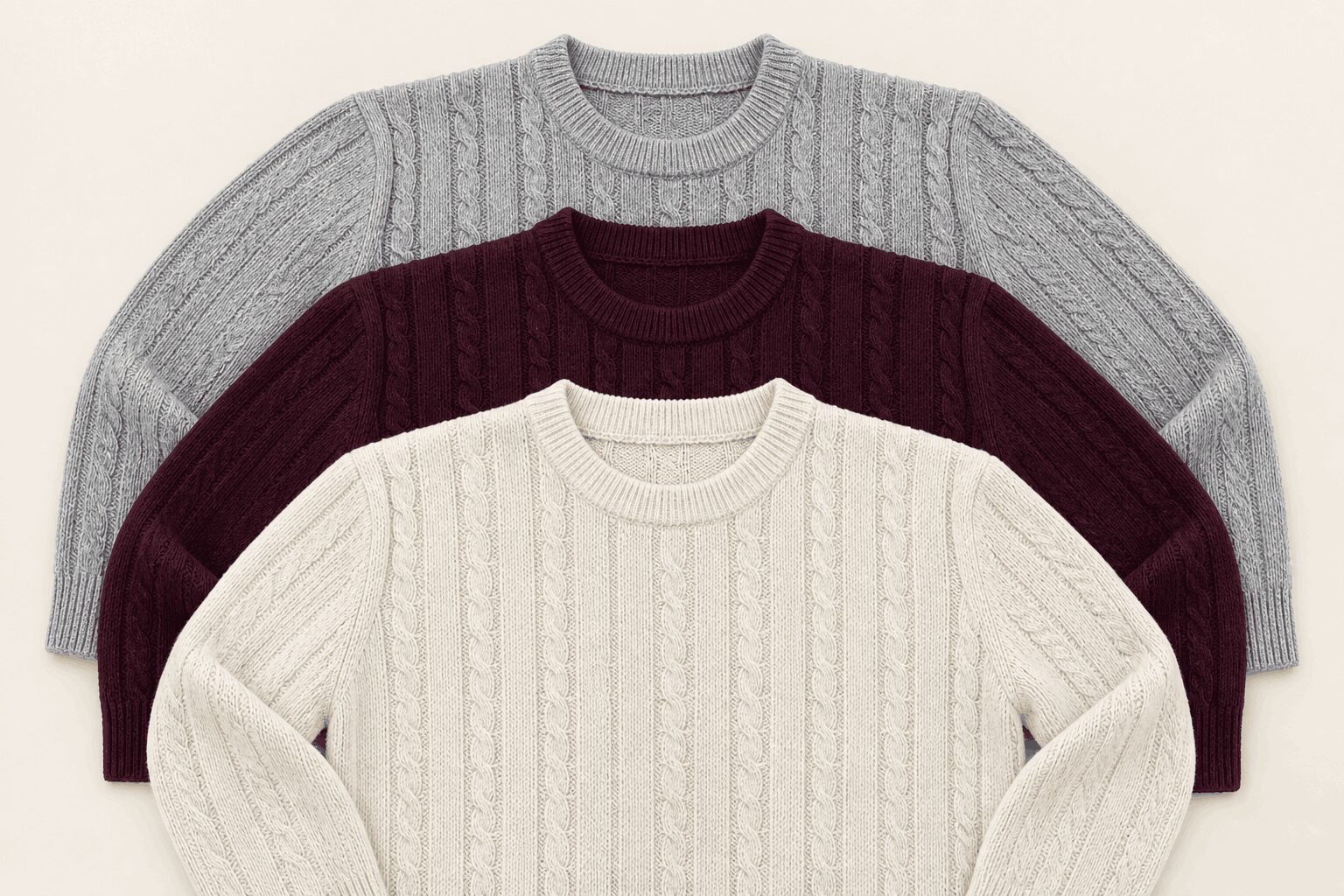
The blended fibre for recycled wool yarn goes through opening and carding to form a web and then a sliver or roving, and is spun to the required count. Recycled wool blends are typically spun on the woollen system rather than the worsted system, because the woollen route tolerates shorter and more variable fibre and produces the lofty, slightly hairy character associated with these yarns.
Counts in the Nm 5/1 to Nm 30/1 range cover most flat-knitting and sock requirements; use our yarn count conversion guide when specifications arrive in Ne or Tex, with two-ply and multifold constructions built from those singles. Coarser counts suit chunky outerwear gauges; finer counts suit 12-gauge knitwear and socks.
What recycled wool yarn means for your finished product
Set recycled wool yarn expectations against the process, not against virgin merino. For broader industry context, see the International Wool Textile Organisation recycled wool resource.
- Handle is lofty and woollen rather than smooth and worsted. This is a characteristic, not a defect.
- Colour carries slight depth variation and a melange character, and lot-to-lot variation is wider than in a dyed virgin yarn.
- Evenness is looser than combed cotton. Agree nominal count tolerance and the test method through the quality control process.
- Pilling behaviour depends heavily on blend ratio and finishing. Test it at development stage on the actual construction you intend to knit.
- Cost is generally below virgin wool of equivalent count, which is a large part of why the category exists.
Discuss a recycled wool yarn development
For a new recycled wool yarn programme, send the required composition, count, colour family, application, quantity and destination. Abtex International can review production feasibility and propose the development route before sampling.
Frequently asked questions
What is recycled wool yarn made from?
Wool recovered mechanically from post-consumer garments, most commonly used sweaters and knitwear. The garments are graded, sorted by colour, stripped of hardware, and pulled back into loose fibre before being blended and spun.
What is the difference between shoddy and mungo?
Shoddy is fibre recovered from loosely constructed knitted or woven goods, where fibre length is better preserved. Mungo is recovered from hard, felted or milled fabrics and comes out much shorter. Knitting yarns use shoddy-grade recovered fibre.
Can recycled wool yarn be 100% wool?
Yes. Pure recycled wool products exist. Abtex’s range described here uses recycled wool blends; confirm composition and performance for the particular yarn.
Is recycled wool yarn dyed?
It may be supplied without additional dyeing. Confirm the route for the order. Colour can be achieved by sorting the input garments into shade families and blending pre-coloured fibre to a target shade, which removes a dyeing stage from the process. Shade is approved against a physical standard rather than a dye recipe.
What counts are available in recycled wool yarn?
Abtex International supplies recycled wool yarn blends from Nm 5/1 to Nm 30/1, with two-ply and multifold constructions available, for flat knitting, sweaters and sock manufacturing.