
Abtex International supplies GRS-certified recycled denim fiber (denim shoddy) processed from post-consumer denim garments. Manufactured at our vertically integrated facility in Pakistan, our denim fiber is used in spinning, nonwoven, insulation, and composites by buyers across Europe, North America, and the Middle East.
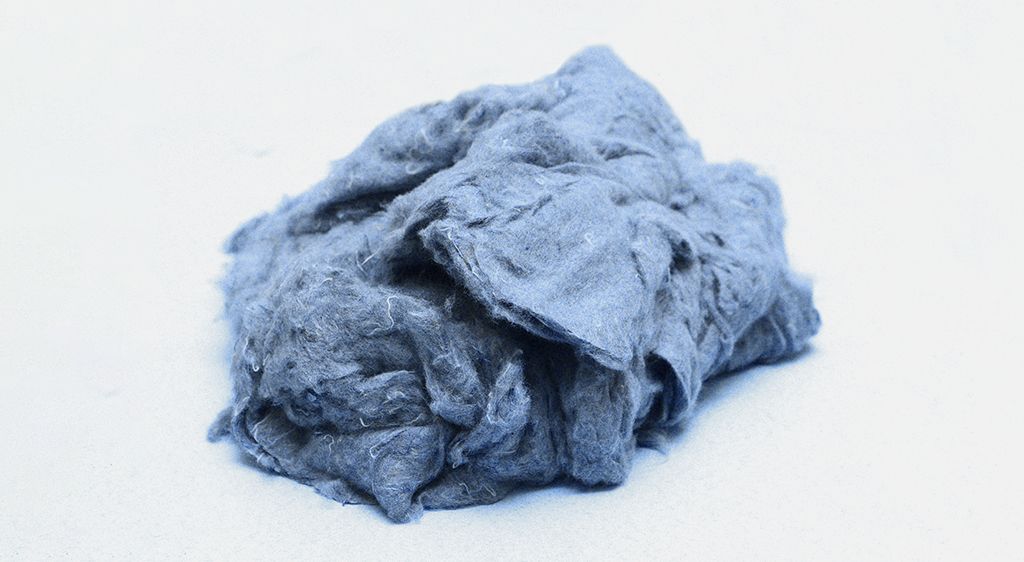
Denim fiber — also called denim shoddy — is a recycled textile fiber produced by mechanically breaking down discarded denim garments (jeans, jackets, shirts) into a fibrous raw material. The process involves collecting post-consumer denim waste, sorting it by color and blend, shredding it into small clips, and then running it through an industrial tearing machine that opens the fabric back into individual fibers.
The resulting denim shoddy fiber retains the characteristics of the original cotton-rich denim — good staple length, natural cellulosic structure, and compatibility with polyester, viscose, and specialty fiber blends. It is widely used in recycled yarn spinning, nonwoven fabric production, sound insulation panels, and composite filling applications.
By diverting denim garments from landfill and reintroducing them into the supply chain as fiber, manufacturers can significantly reduce virgin cotton consumption and lower the carbon footprint of their textiles — making denim fiber a key material in the circular economy.
From discarded denim to certified recycled fiber — our closed-loop process ensures traceability at every stage, meeting GRS chain-of-custody requirements.
Post-consumer denim garments are collected, sorted by color shade (indigo, dark, medium, light, bleached) and fiber content to ensure consistent output quality.
Sorted denim is cut into uniform clips using industrial shredders. Buttons, zippers, and labels are removed at this stage to keep the fiber stream clean.
Denim clips pass through multi-cylinder tearing (garnetting) machines that progressively open the fabric back into individual fibers — denim shoddy. Staple length and softness are controlled at this stage.
Finished denim fiber is hydraulically pressed into bales and labeled with batch number, color grade, and GRS lot reference for full supply-chain traceability. FOB Karachi.
Reference parameters for sourcing. Custom grades, blending ratios, and staple profiles available on request — contact our fiber team with your technical requirements.
Understand the difference between Post-Consumer and Post-Industrial denim fiber, and select the right color grade for your end-application.
PCW denim fiber is produced from denim garments that have completed their useful life — jeans, jackets, and shirts discarded by end consumers. This is the highest-value recycled fiber category for GRS certification and ESG reporting.
PIW denim fiber is sourced from manufacturing waste — cutting room offcuts, rejected fabric rolls, and selvage trimmings from denim mills and apparel factories. Cleaner and more uniform than PCW.
| Color Grade | Description | Typical Applications |
|---|---|---|
| Indigo / Dark | Deep blue-indigo, minimal fading. Darkest available grade. | Dark denim yarn, navy nonwoven panels, sound insulation |
| Medium Wash | Mid-blue, typical worn denim shade. Most common grade. | Denim yarn blends, furnishing filling, composite boards |
| Light Wash | Faded blue, stone-washed or acid-washed denim. | Light-colored nonwoven, insulation batting, padded filling |
| Bleached | Near-white to cream. Heavily bleached or white denim. | Natural-look yarn, undyed filling, acoustic panels |
Recycled denim fiber is a versatile industrial input used across spinning, nonwoven, construction, and home textiles sectors worldwide.
Blended with polyester, viscose, or virgin cotton for open-end and ring-spun recycled denim yarns. Yarn counts Ne 6 to Ne 20 typical. Used in denim fabric and casual knitwear.
Denim shoddy is the primary input for recycled cotton insulation batts — a greener alternative to fibreglass in wall cavity and loft insulation for residential and commercial construction.
Needlepunched denim fiber nonwoven is used in automotive headliners, door panels, and architectural acoustic tiles for its natural sound-absorption properties.
Used as a sustainable alternative to polyester fiberfill in sofa cushions, mattress pads, and chair padding — offering good loft and compressibility at lower cost.
Processed into needlepunched or thermobonded nonwoven rolls for geotextile, packaging underlayment, and industrial wipes with recycled-content certification.
Compressed denim fiber boards are used as inner-door inserts and trunk liners in vehicle interiors, valued for lightness, acoustic performance, and sustainability credentials.
We combine GRS certification, high monthly capacity, and vertical integration to deliver reliable, traceable, and commercially viable recycled denim fiber for demanding buyers.
Our denim fiber carries full Global Recycled Standard (GRS) certification — enabling your brand to make verified recycled content claims on finished products.
Denim fiber sorted and supplied in five distinct color grades — Indigo, Dark, Medium Wash, Light Wash, and Bleached — to suit your end-product requirements.
Every shipment includes GRS TCs, Certificate of Origin, test reports, MSDS, and packing lists — everything your compliance and quality teams need.
We supply to buyers in Europe, North America, and the Middle East. FOB Karachi with CNF and CIF options available on request.
The Global Recycled Standard (GRS) is an international, voluntary, full product standard that sets requirements for third-party certification of recycled content, chain of custody, social and environmental practices, and chemical restrictions.
Abtex International holds GRS certification for its recycled fiber operations. When you source denim shoddy from Abtex, you receive GRS transaction certificates (TCs) that can be forwarded through your supply chain to substantiate recycled content claims on finished goods — meeting requirements for brands targeting GOTS-compliant, Bluesign, or EU textile sustainability regulations.
Denim fiber — also called denim shoddy — is a recycled textile fiber produced by mechanically shredding and tearing discarded denim garments back into individual fibers. Unlike virgin cotton, which is grown from seed and requires significant water and pesticide inputs, denim shoddy is recovered from post-consumer waste, making it a lower-impact alternative. It retains much of the original cotton fiber structure but with a shorter, more varied staple length compared to new cotton lint. It is well-suited to blending with polyester, viscose, or virgin cotton for yarn spinning and nonwoven applications.
Yes. Abtex International holds Global Recycled Standard (GRS) certification for its denim fiber operations. We can provide GRS transaction certificates (TCs) for each shipment, along with scope certificates and chain-of-custody documentation. This allows your brand or downstream manufacturer to claim verified recycled content in finished products and meet third-party audit requirements for sustainability certifications and ESG reporting.
Denim fabric is predominantly cotton — typically 98–100% cotton in traditional denim. However, modern stretch denim often contains 1–5% elastane (spandex) and some blends include a small percentage of polyester. Our sorting process separates pure cotton denim from stretch blends to the extent possible. If you require a specific composition profile (e.g., less than 1% synthetic content), please discuss this with our technical team when placing your order. PCW fiber is generally more variable than PIW fiber sourced from mill offcuts.
We supply denim fiber in five color grades sorted before the tearing process: Indigo / Dark (deep blue), Medium Wash (standard worn denim), Light Wash (faded / stone-washed), Bleached (near-white), and Mixed (unsorted, most economical). If your application requires a specific shade consistency — for example, for producing denim yarn of a defined color — we recommend specifying a single color grade. Mixed grade is suitable for insulation, acoustic panels, and composite applications where color is not critical.
Yes — denim fiber blends well with recycled polyester (rPET), virgin polyester, viscose, recycled cotton, and virgin cotton. Common blend ratios for yarn spinning include 50/50 denim shoddy / polyester, 70/30 denim / recycled polyester, and 60/40 denim / viscose. Abtex’s own spinning unit produces recycled denim yarn from such blends — see our Recycled Denim Yarn page for specifications and yarn counts.
Our standard minimum order quantity is one full container load (FCL). Smaller trial or sample shipments can be arranged for product evaluation prior to bulk ordering. Long-term supply contracts with regular allocation are available for buyers requiring consistent recurring volumes. Please contact us with your specific requirements and we will confirm availability and pricing.
Denim shoddy is hydraulically bale-pressed to approximately 200–250 kg per bale and wrapped in polypropylene strapping. Each bale is labeled with batch number, color grade, weight, and GRS lot reference. Bales are loaded into 20 ft or 40 ft containers and shipped FOB Karachi. CNF and CIF options are available upon request. Typical transit times: 18–22 days to Europe, 20–25 days to the US East Coast, 10–14 days to the Middle East.
Standard documentation includes: Commercial Invoice, Packing List, Bill of Lading, Certificate of Origin (Pakistan), and GRS Transaction Certificate (TC). On request we can also provide: Fiber composition test report (SGS / Intertek), Moisture content certificate, MSDS/SDS (Material Safety Data Sheet), and Pre-shipment inspection report. All documents are available in English and can be provided in both hard copy and digital formats.
Tell us your fiber grade, volume, and destination — we’ll get back to you within 24 business hours.
Fill in the form below with your color grade, quantity, and incoterm preferences and our fiber team will respond promptly.