
Cotton Yarn Knowledge Guide
Uses of 100% Cotton Carded Yarn in Textile Production
Understand how carded cotton yarn is made, where counts from Ne 4s to Ne 42s are used, and when buyers should select carded instead of combed yarn.
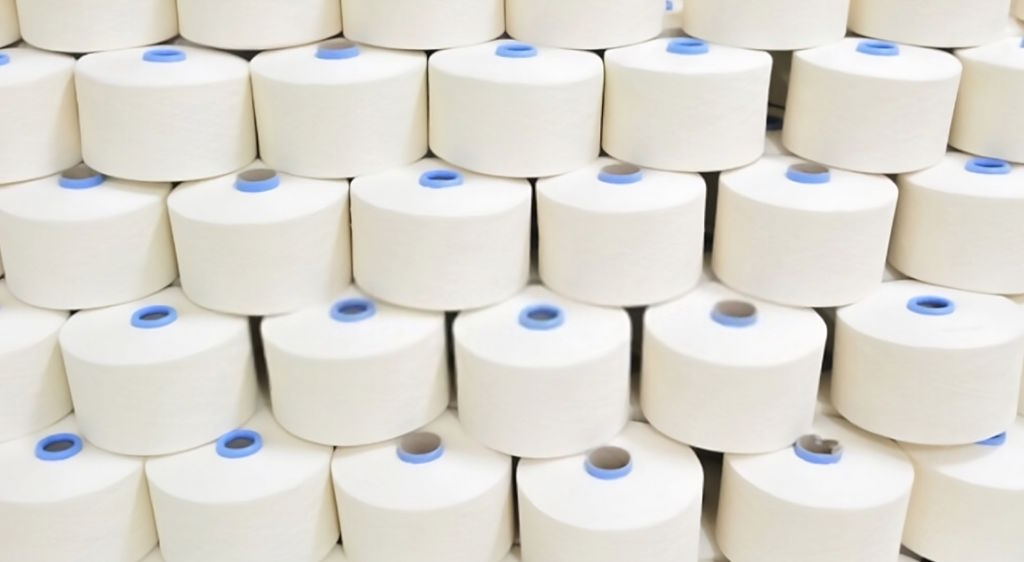
100% cotton carded yarn is widely used in textile production where buyers need cotton comfort, practical performance and competitive cost without the extra fibre-removal stage used for combed yarn. Depending on its count, spinning system, twist and quality level, it can be used for knitted garments, woven fabrics, towels, canvas, cleaning textiles and other everyday products.
The main uses of 100% cotton carded yarn include T-shirts, fleece, sweatshirts, towels, bedding, denim, canvas, workwear, socks and cleaning textiles. Coarser counts are selected for heavier products, while medium and finer counts are used for apparel and lighter fabrics. Abtex supplies carded cotton yarn from Ne 4s to Ne 42s.
What Is 100% Cotton Carded Yarn?
Carded cotton yarn is spun from cotton fibres that have passed through opening, cleaning and carding. During carding, fibres are separated and progressively aligned while trash, dust and some fibre entanglements are removed. The carded sliver then proceeds through drawing and the chosen spinning route.
Unlike 100% cotton combed yarn, carded yarn does not undergo the additional combing stage that removes a greater proportion of short fibres. It therefore usually has a more natural, slightly hairier surface and offers a cost-effective option for many general textile applications.
“Carded” describes the fibre-preparation route. It does not by itself identify the spinning system. Carded cotton can be produced in ring-spun or open-end/rotor constructions depending on the count, quality target and intended application.
How Is Carded Cotton Yarn Made?
Opening and Cleaning
Cotton bales are opened, mixed and cleaned to remove larger impurities and prepare an even fibre feed.
Carding
Fibres are separated, partially aligned and formed into a continuous sliver while remaining trash and some neps are removed.
Drawing
Multiple slivers are combined and drafted to improve blending and mass uniformity before spinning preparation.
Roving if Required
For ring spinning, drawn sliver is reduced to roving and given slight twist for controlled feeding to the ring frame.
Spinning
Fibres are drafted and twisted into the required count using the selected ring or rotor spinning system.
Winding and Testing
Yarn is cleared, wound onto cones, tested against agreed parameters and packed for shipment.
Benefits of 100% Cotton Carded Yarn
Cost-Effective Cotton Option
Skipping the additional combing stage reduces processing and fibre loss, making carded yarn economical for volume production and general-purpose textiles.
Natural Cotton Character
The slightly hairier and less polished surface can create a natural, matte or casual appearance that suits many everyday fabrics.
Wide Application Range
Coarse through medium-fine counts can serve heavy cleaning products, canvas, denim, towels, casual knits and lighter apparel fabrics.
Comfort and Moisture Absorption
As a 100% cotton yarn, it can contribute softness and moisture absorption. Final comfort and breathability also depend on fabric construction and finishing.
Good Dyeing Versatility
Carded cotton can be supplied raw for downstream processing or prepared in dyed and bleached forms according to product requirements.
Multiple Packing Options
Export orders may be packed in cartons, PP bags or pallets, including buyer-marked packing where required.
Uses of Cotton Carded Yarn by Textile Application
Knitted T-Shirts and Jersey
Medium counts are used for single jersey, casual T-shirts, basic tops and other knitted fabrics where practical cost and cotton hand feel are important.
Fleece and Sweatshirts
Carded cotton is used in fleece, sweatshirts, hoodies and brushed-back fabrics, often in constructions designed for bulk and warmth.
Towels and Home Textiles
Suitable counts can be used in towels, bedding and utility home textiles. Absorbency and hand feel depend on yarn construction, twist and finishing.
Denim and Workwear
Coarse and medium carded yarns are used in durable woven products such as denim, uniforms, workwear and general-purpose fabrics.
Canvas and Heavy Fabrics
Coarser counts can be selected for canvas fabric, bags, utility cloth and other heavier constructions.
Mops and Cleaning Textiles
Coarse counts provide the bulk needed for mop yarn, wiping cloths and selected industrial cleaning products.
Carded Cotton Yarn Count Range and Typical Uses
Count alone does not determine suitability. Twist, strength, evenness, hairiness, spinning system, ply and fabric construction must be evaluated together. The following is a practical application guide for Abtex’s available Ne 4s–42s range:
| Count category | Typical Ne range | Common applications | Buyer considerations |
|---|---|---|---|
| Coarse | Ne 4s–10s | Mops, cleaning cloths, canvas, heavy knits | Bulk, strength, twist, abrasion and spinning system |
| Medium-coarse | Ne 10s–20s | Denim, towels, fleece, sweatshirts, workwear | Fabric weight, absorbency, hairiness and strength |
| Medium | Ne 20s–30s | T-shirts, jersey, socks, casualwear and bedding | Evenness, hand feel, pilling and knitting performance |
| Medium-fine | Ne 30s–42s | Lightweight knits, lighter woven fabrics and selected blends | Lower imperfections and tighter quality control may be required |
Carded Yarn vs Combed Yarn
| Property | Carded cotton yarn | Combed cotton yarn |
|---|---|---|
| Fibre preparation | Opening, cleaning and carding without additional combing | Carding followed by combing to remove more short fibres |
| Surface | More natural and generally hairier | Smoother and generally lower in hairiness |
| Uniformity | Suitable for general textile quality requirements | Selected where greater uniformity and cleaner appearance are required |
| Cost | Usually more economical | Usually higher due to extra processing and fibre removal |
| Typical uses | Casual knits, towels, canvas, denim, workwear and cleaning textiles | Fine knitwear, premium T-shirts, shirting, hosiery and high-quality bedding |
Buyers can also review Abtex’s broader cotton yarn guide for a detailed explanation of carded and combed constructions.
When Should Buyers Choose Carded Yarn?
Carded yarn is often the practical choice when the product does not require the very smooth surface, low hairiness or fine uniformity associated with combed yarn. It is particularly relevant when:
- Competitive raw-material cost is important
- A natural or casual surface is acceptable
- The application uses coarse or medium counts
- Bulk or absorbency matters more than high lustre
- The fabric is intended for everyday apparel
- The end use includes towels or utility textiles
- The product uses denim, canvas or workwear fabric
- Approved performance can be achieved without combing
What Buyers Should Specify Before Ordering
For accurate development, testing and quotation, provide the following information:
- 100% cotton composition and cotton requirement
- Yarn count in Ne or another required system
- Single, folded or plied construction
- Ring-spun or open-end/rotor requirement
- Carded quality and Uster benchmark
- Required twist direction and twist level
- CSP, tenacity and elongation requirements
- Evenness, imperfections, neps and hairiness limits
- Knitting, weaving and final textile application
- Raw, bleached or dyed requirement
- Cone weight and packing method
- Quantity, destination and shipment terms
Raw, Bleached and Dyed Cotton Yarn Options
Carded cotton yarn may be sourced raw for later processing, or buyers may require prepared colour options for specific applications. Abtex’s yarn portfolio includes bleached white cotton yarn, black dyed cotton yarn and custom dyed yarns. The correct route depends on the required shade, colourfastness, process sequence and final textile construction.
Why Source Cotton Carded Yarn from Abtex International?
Abtex International supplies 100% cotton carded yarn from Pakistan in counts from Ne 4s to Ne 42s. Quality can be benchmarked against agreed Uster statistics, and special requirements for strength, evenness, imperfections or hairiness can be reviewed during development.
Carton, PP bag, pallet and buyer-marked packing options are available. Browse the complete Abtex yarn range or send your count, quality, application, quantity and packing specification for a commercial quotation.
Frequently Asked Questions
What is 100% cotton carded yarn?
It is yarn made entirely from cotton fibres prepared through opening, cleaning and carding without the additional combing stage used for combed yarn.
What is cotton carded yarn used for?
Common uses include T-shirts, jersey, fleece, sweatshirts, towels, bedding, denim, canvas, workwear, socks, mops and cleaning textiles. Suitability depends on count, spinning system, twist and fabric construction.
What count range does Abtex supply?
Abtex supplies 100% cotton carded yarn from Ne 4s to Ne 42s, covering coarse counts for heavy textiles through medium-fine counts for lighter fabrics.
Is carded yarn always open-end yarn?
No. Carded describes fibre preparation. Carded cotton may be produced using ring spinning or open-end/rotor spinning depending on the required count, quality and application.
What is the difference between carded and combed cotton yarn?
Combed yarn receives an additional combing process that removes more short fibres and aligns the remaining fibres more closely. It is generally smoother and more uniform, while carded yarn is generally more economical and retains a more natural surface.
Can carded cotton yarn be bleached or dyed?
Yes. Cotton yarn can be supplied raw for downstream processing or developed in bleached and dyed forms. Buyers should specify the required shade, fastness and end use.
What packing options are available?
Abtex offers carton, PP bag and pallet packing. Buyer-marked packing can also be reviewed according to order and shipping requirements.
How can I request a quotation?
Provide the yarn count, spinning system, construction, quality parameters, application, quantity, packing requirement and delivery destination through the Abtex contact page.
Source 100% Cotton Carded Yarn from Pakistan
Contact Abtex International with your required count, construction, quality parameters, application, quantity, packing and delivery destination.