
How Carpet Manufacturers Should Specify Yarn Before Buying
How to translate carpet construction, loom requirements and quality targets into a measurable yarn specification before requesting a quotation.
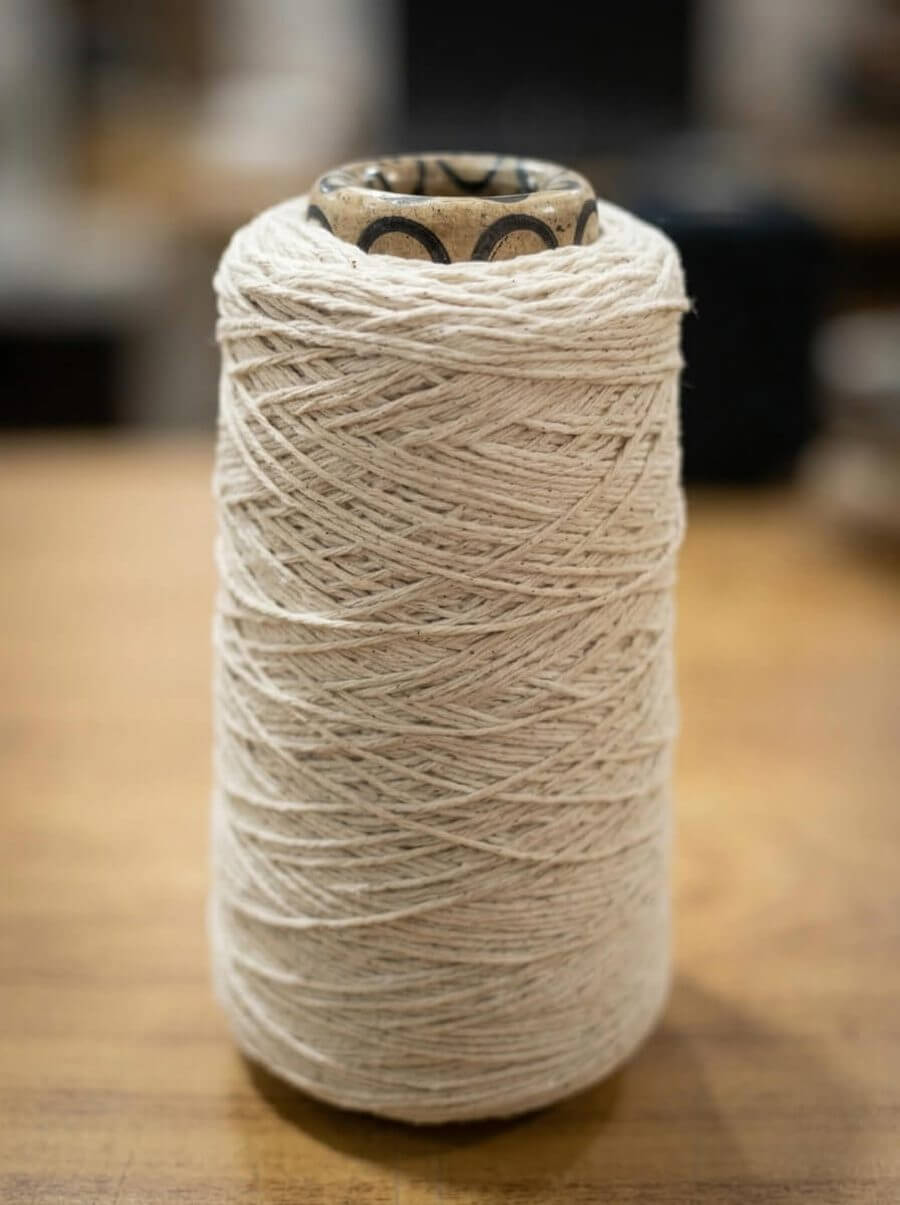
For a carpet manufacturer, carpet yarn is not a generic raw material. It is a technical performance input that affects loom efficiency, pile coverage, abrasion behaviour, shade consistency, waste levels and finished-carpet quality.
A yarn that appears economical per kilogram can become expensive if it causes frequent breaks, uneven construction, excessive shedding, inconsistent colour, poor coverage or a higher rejection rate.
Abtex International (Pvt.) Ltd. supplies open-end cotton/polyester yarns in raw white and melange options, with single counts from Ne 3s to Ne 12s and constructions of up to 6 ply, subject to technical feasibility and the buyer’s production requirements.
Direct Answer: What Should a Carpet Manufacturer Specify?
The correct buying specification should define fibre composition, single count, number of plies, resultant count, twist, strength, colour, package format and intended end use.
It should also record the loom type, ends and picks per inch, pile height, finished carpet weight, dyeing route, working tension and acceptable yarn-breakage rate.
For woven rugs, durries, backing structures and selected pile applications, coarse multi-ply cotton/polyester open-end yarn can provide a practical balance of bulk, strength, coverage, consistency and production cost.
A professional enquiry should include enough technical information for the supplier to recommend or reproduce the required carpet yarn, rather than asking only for a “strong coarse yarn.”
Core Concepts and Definitions
The main technical terms explain how fine or coarse the yarn is, how many strands are combined and how the final construction will perform during carpet production.
Yarn Count
Abtex commonly specifies coarse spun yarns in English cotton count, written as Ne. In this indirect system, a higher Ne number represents a finer yarn and a lower Ne number represents a coarser yarn.
- Ne 3s is coarser than Ne 6s.
- Ne 6s is coarser than Ne 12s.
- Ne 6/3 combines three Ne 6 singles.
Ply
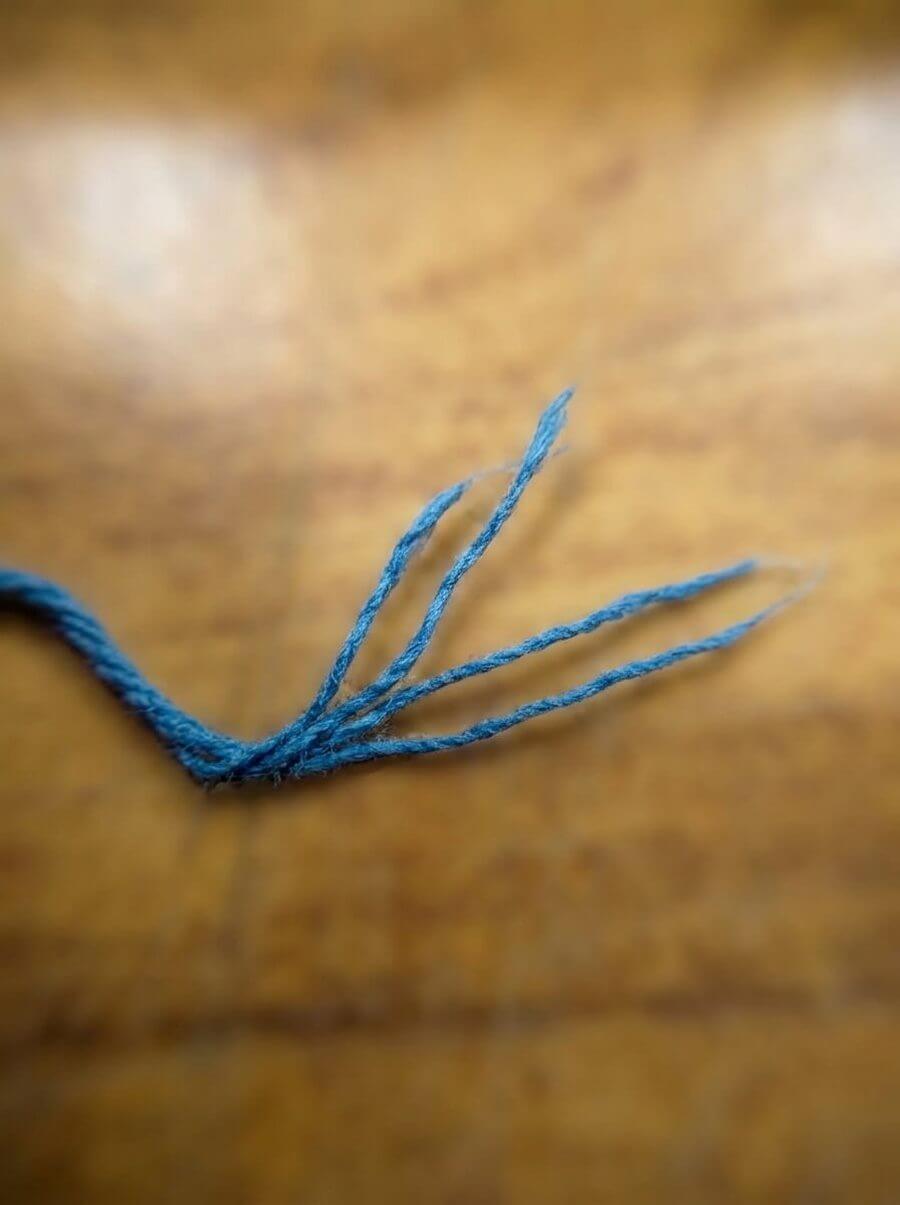
Ply describes the number of singles twisted together. Increasing the plies changes diameter, cohesion, bulk, coverage, bending behaviour, strand separation and weight per metre.
Like an electrical cable made from several smaller wires, the combined yarn is not only heavier; it also behaves differently under tension and repeated movement.
Twist
Twist holds staple fibres together and affects tensile strength, hardness, surface hairiness, shedding, stability and appearance. Too little twist may increase fibre loss; too much can reduce bulk, increase snarling and create an unsuitable surface.
Specify turns per inch (TPI) or turns per metre (TPM), together with S or Z direction.
Blend Ratio
The cotton/polyester ratio influences handle, absorbency, tensile performance, dimensional stability, abrasion behaviour and consistency. Cotton contributes natural character and absorbency; polyester can improve strength, stability and wear resistance.
Open-End Spinning
Open-end spinning is suitable for coarse cotton/polyester singles that can be combined into multi-ply constructions. Its structure differs from ring-spun yarn, so yarns with the same nominal count may not perform identically.
Learn more about the production method in our guide to open-end yarn.
Resultant Count
Resultant count expresses the approximate combined size after plying. It allows buyers to compare total linear density instead of looking only at the single count.
For example, Ne 6/3 has an approximate resultant count of Ne 2.
Tex ≈ 590.5 ÷ Resultant Ne | TPM ≈ TPI × 39.37Accordingly, Ne 6/3 has a nominal linear density of approximately 295 tex. These are nominal calculations; fibre density, blend, structure, twist, openness and applied tension also affect actual diameter and coverage.
Detailed Technical Breakdown: How to Specify Carpet Yarn
A structured six-step process converts the carpet design into measurable yarn requirements.
Define the Yarn’s Function
Identify whether the yarn will be used for warp, weft, pile, flat-woven body, backing, structural binding, decorative texture or a melange effect.
Warp generally requires running stability and low sensitivity to breakage. Weft may prioritise coverage and insertion performance, while pile needs the correct balance of bulk, resilience, twist stability and surface appearance.
Match Count and Ply to the Carpet Construction
Start with the carpet sample, loom setting, finished GSM, picks and ends per inch, pile height, width and target coverage. Compare resultant yarn size rather than only the single count.
| Example construction | Resultant count | Approximate tex | Relative character |
|---|---|---|---|
| Ne 12/2 | Ne 6.00 | 98 tex | Finer and lighter |
| Ne 8/3 | Ne 2.67 | 221 tex | Medium-coarse with balanced bulk |
| Ne 6/3 | Ne 2.00 | 295 tex | Coarse and fuller |
| Ne 4/4 | Ne 1.00 | 591 tex | Very coarse with heavy coverage |
| Ne 3/6 | Ne 0.50 | 1,181 tex | Extremely heavy multi-ply construction |
These nominal figures do not by themselves predict actual yarn diameter or carpet coverage. Blend, fibre density, spinning structure, twist, yarn openness, finishing and tension also matter.
Establish Twist and Tensile Requirements by Trial
Do not copy a TPI value from an unrelated carpet. Ask for a trial range and evaluate:
- Single-end tensile strength and elongation
- Lea strength or count-strength product, where applicable
- Ply balance and snarling tendency
- Breaks per operating shift
- Surface hairiness and fibre shedding
- Loom tension and visual coverage
- Finished carpet handle
For a new construction, test at least two twist levels under the same loom settings. Select for the lowest total manufacturing cost, not merely the highest laboratory breaking strength.
Review how Abtex manages textile testing and production controls on our quality control page.
Define Colour and Shade-Control Methods
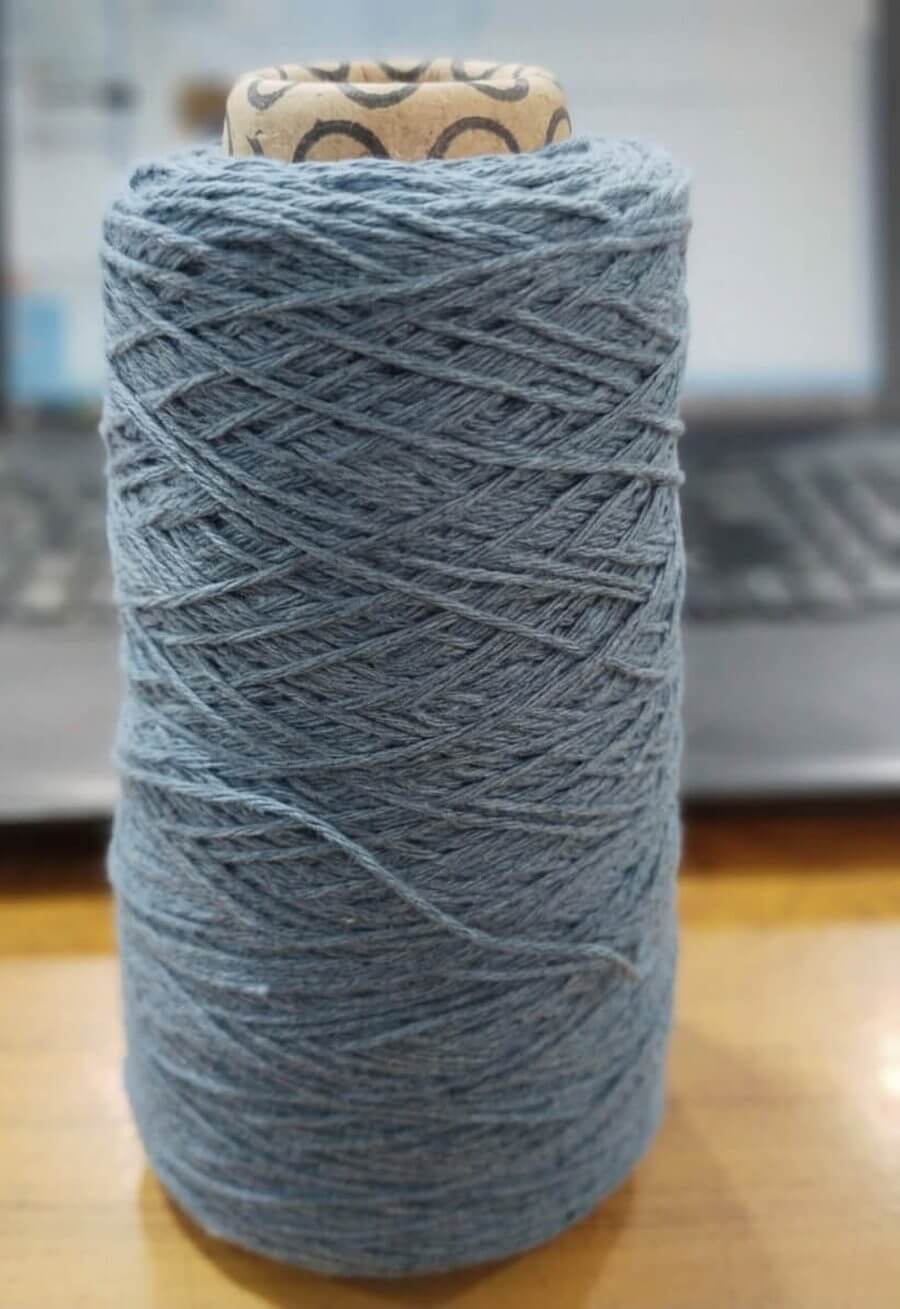
Raw white may suit later dyeing, a natural appearance or structural use. Melange yarn combines differently coloured fibres before spinning to create a blended or heathered effect. Develop shades against an approved physical sample or agreed reference.
- Physical master or buyer standard
- PANTONE reference where appropriate
- Instrumental method if required
- Viewing light source and permitted variation
- Lot segregation and package identification
- Whether approval applies to fibre, yarn or finished carpet
If a solid coloured route is required, consult the wider dyed yarn range and agree the relevant fastness and shade-approval requirements.
Specify Package and Packing Requirements
Cone build affects unwinding tension, running stability and loom efficiency. The purchase order should define:
- Net cone weight and tolerance
- Tube dimensions and material
- Winding density, traverse and package build
- Knot or splice policy
- Cones and weight per carton
- Palletisation and moisture protection
- Export marks and lot identification
Local sales are quoted in PKR. Export sales are quoted in USD, with FOB, CFR—commonly referred to as CNF—and CIF options available according to the destination and agreed commercial terms.
Approve a Controlled Production Trial
Record the loom model and speed, running hours, yarn tension, number of breaks, waste, carpet weight, width variation, shade, surface appearance, rejected pieces and operator comments. This converts “the yarn runs well” into measurable evidence.
A practical supplier scorecard may include:
- Agreed count tolerance
- Cone-weight tolerance
- Breaks per 100 kg
- Breaks per production shift
- Waste percentage
- Output per loom hour
- Rejected-carpet percentage
- Shade approval status
- Kilograms affected by claims
- Corrective-action response time
These are procurement control points, not universal limits. Each manufacturer should establish tolerances appropriate to its machinery, construction and quality level.
Comparison of Carpet Yarn Options
The best yarn system depends on traffic level, carpet construction, appearance, moisture exposure, processing method and target market.
For a broader explanation of carpet fibres, pile yarn systems and carpet construction, refer to the Carpet and Rug Institute’s Carpet Primer.
| Yarn option | Main advantages | Main limitations | Suitable uses |
|---|---|---|---|
| Cotton/polyester open-end spun | Customisable blend, coarse counts, bulk-cost balance and natural textile character | Not a direct substitute for BCF systems; trial required | Woven rugs, durries, structural yarns, backing and selected pile uses |
| 100% cotton spun | Natural handle, absorbency and familiar dyeing behaviour | Lower dimensional stability and abrasion resistance than many synthetic options | Decorative rugs and natural-look products |
| Polyester spun or BCF | Colour clarity, stain resistance and supply consistency | May flatten under demanding traffic depending on construction | Residential and decorative carpets |
| Polypropylene BCF | Moisture and stain resistance, low density and favourable economics | Lower resilience than nylon in demanding installations | Loop pile, indoor/outdoor and value segments |
| Nylon BCF | High resilience and abrasion resistance | Usually a higher-cost and different processing system | High-traffic residential and commercial carpets |
| Wool or wool-rich blend | Premium resilience, natural appearance and favourable flame behaviour | Higher material cost and stricter blend control | Premium woven and tufted carpets |
For buyers sourcing coarse spun blends, the decision is not simply cotton versus synthetic. Compare surface coverage, loom efficiency, waste, durability, process compatibility and total conversion cost.
Abtex offers raw-white and melange cotton/polyester open-end yarns in Ne 3s to Ne 12s singles and constructions up to 6 ply for carpet weaving, rugs, durries, warp, weft and selected pile applications. Review the complete carpet yarn manufacturing range.
Illustrative Production Case Study
This scenario explains the value of specification control and must not be presented as an audited customer claim.
Client Goal
A manufacturer of flat-woven cotton/polyester rugs wanted to reduce loom stops, visible weft bars, inconsistent coverage, yarn waste and rejected pieces. Its previous purchase specification included only approximate count and colour, without resultant count, twist, cone tolerance, tube dimensions, package build or approved shade standard.
Implementation Steps
- Record a four-week baseline for breaks, waste, output and rejects.
- Standardise single count, three-ply resultant size and fibre ratio.
- Add twist direction, cone weight, tube dimensions and shade master.
- Test two twist options on the same loom and carpet setting.
- Approve the better-performing construction for a pilot lot.
- Use traceable lot identification and retained reference cones.
Illustrative Results After Four Comparable Lots
| KPI | Baseline | Controlled specification | Illustrative change |
|---|---|---|---|
| Yarn breaks per 100 kg | 8.5 | 5.4 | 36% lower |
| Yarn waste | 6.2% | 4.7% | 24% lower |
| Loom output per shift | 100 index | 111 index | 11% higher |
| Rejected carpet pieces | 2.8% | 1.1% | 61% lower |
| Unplanned yarn changeovers | 14 per month | 8 per month | 43% lower |
The example does not suggest every factory will achieve identical results. It shows how measurable specifications help separate yarn variation from loom settings, humidity, storage, maintenance and operator-related factors.
“Carpet manufacturers should approve yarn on loom performance, resultant count, twist balance and lot consistency—not on price per kilogram alone. A small material saving can be erased quickly by higher waste, repeated stoppages or additional finished-carpet rejection.”
— Abtex International (Pvt.) Ltd. Technical Sourcing Team
Common Pitfalls and Mistakes
Most sourcing failures result from incomplete specifications and comparisons based only on nominal single count.
They use the same singles but have different resultant counts, linear densities, diameters, weights and coverage. Always state the plies.
In the English cotton count system, higher Ne is finer. Confusing Ne with direct systems such as tex can create major errors.
A hard, highly twisted yarn may test strong but give poor coverage, stiffness, snarling or an unsuitable carpet surface.
Displays, lighting and image processing change colour. Use a physical master and agreed light source, especially for melange shades.
Wrong tubes or package build can create tension and unwinding problems. Cone geometry is a technical parameter.
A hand sample cannot predict full production reliably. Approve the yarn through a loom trial and controlled pilot.
Unsegregated lots can create shade bars, performance variation and claim-investigation problems.
Keep sealed reference cones and reports so defects can be traced to yarn, loom settings, humidity, storage or finishing.
Conclusion and Key Takeaways
A disciplined specification turns yarn purchasing from basic sourcing into controlled process engineering.
The correct carpet yarn should be selected through resultant count, fibre composition, ply, twist, strength, shade, package format and documented loom performance.
For coarse woven carpets, rugs and durrie programmes, customised cotton/polyester open-end constructions can balance bulk, consistency, textile character and commercial viability when matched correctly to the finished product.
- Specify end use before count or ply
- Compare resultant size, not only singles
- Approve twist and strength on the loom
- Control cone weight and package build
- Track breaks, waste, output and rejects
- Segregate and identify production lots
- Retain reference cones from each shipment
- Local quotations are issued in PKR; export quotations are issued in USD under agreed FOB, CFR or CIF terms
Frequently Asked Questions
What yarn specification is suitable for woven carpets and rugs?
Select the specification according to carpet construction, loom type, required coverage and end use. Define fibre ratio, Ne count, ply, twist, strength, colour, cone weight and acceptance tolerances before ordering.
How do yarn count and ply affect carpet production?
Count and ply determine resultant linear density, diameter, bulk, running behaviour and consumption. In the Ne system, a higher count is finer, while additional plies create a heavier combined construction.
What information is required to request a quotation?
Provide composition, single count, plies, twist requirement, raw-white or melange shade, cone format, quantity, destination and shipment term. These details allow Abtex to confirm feasibility, lead time and commercial terms.
What count range does Abtex supply for carpet yarn?
Abtex supplies single counts from Ne 3s to Ne 12s, with constructions available up to 6 ply, subject to technical feasibility and buyer requirements.
Can the cotton/polyester blend ratio be customised?
Yes. The blend ratio is developed according to buyer requirement. Include the required composition in the technical enquiry so feasibility and pricing can be reviewed.
Why is a loom trial necessary?
Nominal count and laboratory strength cannot fully predict unwinding, breakage, coverage, shedding or finished handle. A controlled loom trial provides production evidence before a bulk order.
Send your fibre composition, count, ply, twist, colour, cone format, loom application, quantity and destination to Abtex International for technical and commercial review.