
Textile Buyer’s Guide
Yarn-Dyed Fabric vs Piece-Dyed Fabric: Which Is Better?
Compare two finished-fabric dyeing routes by colour effect, construction, MOQ, cost, lead time and final application.
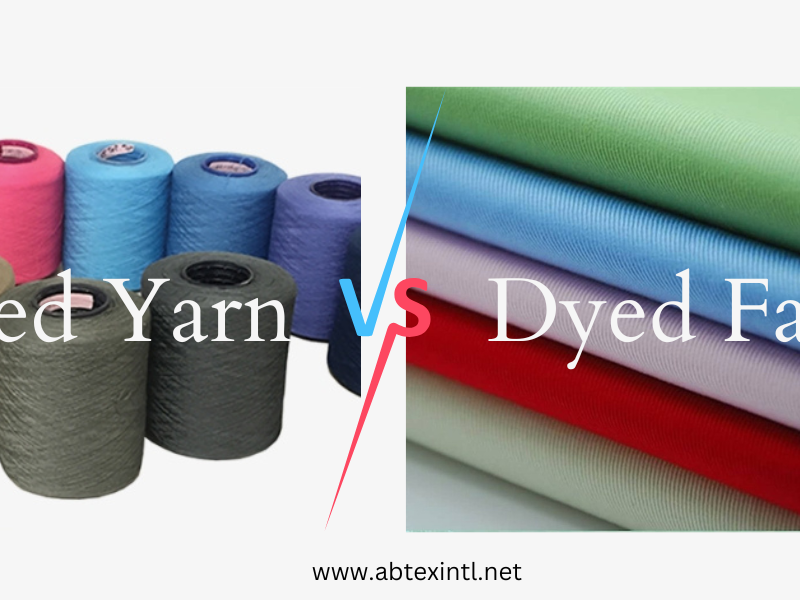
Yarn-dyed fabric is not automatically better than piece-dyed fabric. The correct choice depends on the required colour effect, fabric construction, production quantity, cost target, lead time and final application.
Yarn-dyed fabric is produced by weaving or knitting previously coloured yarns. It is generally preferred when colours must be incorporated into the textile construction, such as in checks, stripes, plaids, mélange effects and multicolour knitted structures. Piece-dyed fabric is dyed after the fabric has been constructed and is normally more practical for solid-colour programmes where cost efficiency, production flexibility and shorter development time are important.
Quick Answer
Choose yarn-dyed fabric when the product requires:
- Woven checks, stripes or plaids
- Multiple colours within one fabric
- Colour placement during weaving or knitting
- Mélange, chambray or special yarn effects
- Knitted patterns, sweaters or socks
Choose piece-dyed fabric when the product requires:
- A uniform solid colour
- Lower production complexity
- Faster colour changes
- Flexibility from available grey fabric
- Solid poplin, twill, canvas, jersey or sheeting
Neither fabric route automatically provides better colour fastness. Performance depends on the fibre, dye class, dyeing recipe, fixation, washing and quality-control standards.
What Is Yarn-Dyed Fabric?
Yarn-dyed fabric is fabric woven or knitted from yarns that were coloured before fabric construction. The yarn may be dyed in cones, packages, hanks or other forms depending on the yarn type and manufacturing process.
Cone or package dyeing is commonly used to prepare dyed yarn for industrial weaving and knitting. The yarn is wound onto perforated packages, loaded into a dyeing machine and treated under controlled pressure, temperature and chemical conditions. Learn more in our guide to cone-dyed yarn.
The dyed yarns are then arranged during weaving or knitting to create the finished yarn-dyed fabric. This route allows manufacturers to combine different colours within the construction, making it suitable for checks, stripes, plaids, chambray effects, jacquard structures, socks, sweaters and other products where colour is part of the textile design.
What Is Piece-Dyed Fabric?
The term “dyed fabric” can refer broadly to any coloured fabric. In this comparison, it means piece-dyed fabric: fabric that is coloured after it has been woven or knitted.
In piece dyeing, grey fabric or prepared fabric is first woven or knitted and is then dyed as a complete fabric roll. The process may include preparation, scouring, bleaching, dyeing, washing, fixation and finishing.
Piece dyeing is commonly used for solid-colour fabrics such as poplin, twill, drill, canvas, sheeting, jersey, fleece, Oxford, and uniform and workwear fabrics. Because the fabric is produced before the final colour is selected, manufacturers can keep grey fabric in stock and dye it according to confirmed colour requirements.
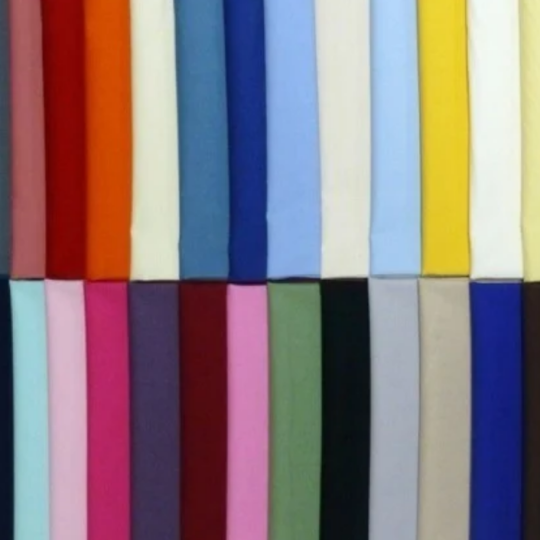
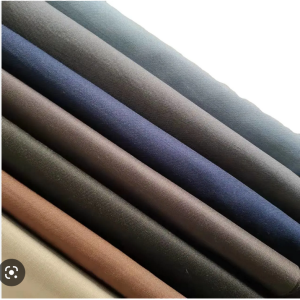
Yarn-Dyed Fabric vs Piece-Dyed Fabric: Key Differences
| Factor | Yarn-dyed fabric | Piece-dyed fabric |
|---|---|---|
| Dyeing stage | Before weaving or knitting | After weaving or knitting |
| Best suited for | Checks, stripes, plaids and multicolour effects | Solid and uniform colours |
| Colour placement | Controlled during fabric construction | Applied across the completed fabric |
| Production complexity | Higher for multicolour designs | Generally lower for solid colours |
| Lead time | May be longer due to yarn dyeing and fabric formation | Often shorter when grey fabric is available |
| Cost | Often higher for complex designs and multiple shades | Often more economical for solid colours |
| MOQ | May apply separately to every yarn shade | Usually based on the dyeing-machine batch |
| Inventory flexibility | Requires planning by yarn colour | Grey fabric can be dyed after colour confirmation |
| Colour fastness | Depends on fibre, dye and process | Depends on fibre, dye and process |
| Common applications | Shirts, checks, socks, sweaters and decorative fabrics | Uniforms, workwear, shirts, trousers and home textiles |
Is Yarn-Dyed Fabric Better for Colour Fastness?
Yarn-dyed fabric does not automatically have better colour fastness than piece-dyed fabric. Colour fastness is affected by fibre composition, dye class, pretreatment, dye concentration, temperature and processing time, fixation, soaping and washing, finishing, and the required testing standard.
For example, properly processed reactive-dyed cotton fabric can provide strong wash-fastness results. Vat-dyed cotton may be selected where particularly demanding wash or light-fastness performance is required. Polyester normally requires disperse dyes, while other fibres require suitable dye classes and processing conditions.
Specify the required test standard and minimum rating instead of assuming that one dyeing stage will always perform better.
Which Option Costs Less?
Piece-dyed fabric is generally more economical for solid colours because one completed fabric can be dyed in a single shade without managing several separately dyed yarn lots.
Yarn-dyed fabric may cost more when a design requires several yarn colours, separate dyeing lots, colour-wise minimum quantities, additional shade approvals, more complicated weaving or knitting, or higher process control during fabric formation.
However, the final cost depends on the fibre, yarn count, fabric construction, number of colours, quantity and required fastness. A simple yarn-dyed fabric may sometimes be commercially competitive, while a highly specialised piece-dyed fabric with functional finishes may cost considerably more.
Which Option Has a Lower MOQ?
There is no universal MOQ advantage. Yarn-dyed fabric programmes may have minimum quantities for each yarn count and colour. A check or stripe containing several colours can therefore require separate minimum dyeing quantities for every shade, in addition to weaving or knitting minimums.
Piece-dyed fabric usually has a minimum quantity based on dyeing-machine capacity, fabric construction, shade, width and finishing requirements. When a suitable grey fabric is already available, piece dyeing may provide greater flexibility for solid-colour development. When grey fabric must be specially woven, the weaving MOQ must also be considered.
Applications of Yarn-Dyed Fabric
The main advantage of yarn-dyed fabric is the ability to build colour directly into the textile structure. Common applications include:
- Yarn-dyed check shirts
- Striped shirting
- Plaid and flannel fabrics
- Chambray effects
- Multicolour Oxford fabrics
- Socks and sweaters
- Knitted patterns
- Decorative fabrics
- Upholstery patterns
- Towels with coloured-yarn effects
Applications of Piece-Dyed Fabric
Piece-dyed fabric is widely used where a solid shade is required. Common applications include:
- Solid-colour shirts and blouses
- Uniforms and workwear
- Trousers and jackets
- Aprons and canvas products
- Bed linen
- Pocketing
- Medical textiles
- Institutional textiles
- Solid jersey garments
- Solid fleece garments
For solid poplin, twill, drill and canvas fabrics, piece dyeing normally provides an efficient and flexible solution.
Which Dyeing Method Is More Sustainable?
Neither yarn-dyed nor piece-dyed fabric is automatically more sustainable. Environmental impact depends on water and energy consumption, dye and chemical selection, machine loading efficiency, wastewater treatment, shade accuracy, reprocessing and rejected lots, production quantity, fibre selection and supplier certifications.
A poorly controlled process that requires repeated shade corrections can create more waste regardless of whether the material is dyed as yarn or fabric. Buyers should evaluate the dye house, wastewater-treatment system, chemical-management procedures and certification status rather than judging sustainability only by the dyeing stage.
How Textile Buyers Should Choose
Choose yarn-dyed fabric when:
- The design contains checks, stripes or multiple colours.
- Colour must be positioned within the weave or knit.
- A mélange or special yarn effect is required.
- The product design justifies additional processing cost.
- Yarn colour is an important visual feature.
Choose piece-dyed fabric when:
- A uniform solid colour is required.
- Cost and production speed are priorities.
- Grey fabric is already available.
- Colours may change after fabric development.
- The product uses standard poplin, twill, drill, canvas or jersey.
Information Required for a Quotation
To obtain an accurate yarn-dyed or piece-dyed fabric quotation, buyers should provide:
- Fibre composition
- Yarn count
- Weave or knit construction
- Fabric weight or GSM
- Finished width
- Required colour or Pantone reference
- Number of colours
- Dyeing method, where specified
- Required colour-fastness standards
- Required functional finishes
- Order quantity
- Packing requirements
- Destination and shipment terms
- Intended end use
Without these details, any price should be treated only as a preliminary estimate.
Conclusion
Yarn-dyed fabric is better for products where colour, pattern or yarn effect must be incorporated during weaving or knitting. Piece-dyed fabric is generally more suitable for solid colours, flexible production planning and cost-efficient bulk manufacturing.
The correct decision should be based on the product design, construction, required performance, quantity, cost target and lead time—not on the assumption that one dyeing stage is universally superior.
Abtex International (Pvt.) Ltd. supplies dyed yarn for yarn-dyed fabric production and piece-dyed fabric for woven, knitted, apparel, home-textile and industrial applications. Buyers can submit their required composition, count, construction, shade, quantity and performance requirements for technical review and quotation.
Frequently Asked Questions
Is yarn-dyed fabric the same as dyed yarn?
No. Dyed yarn is the coloured raw material. Yarn-dyed fabric is the finished fabric produced by weaving or knitting those coloured yarns.
Is yarn-dyed fabric more colourfast than piece-dyed fabric?
Not necessarily. Colour fastness depends on the fibre, dye class, fixation, washing and process control. Both yarn-dyed and piece-dyed fabrics can achieve strong fastness results when processed correctly.
Which option is better for checks and stripes?
Yarn-dyed fabric is normally better for woven checks, stripes and plaids because different coloured yarns can be arranged during weaving.
Which option is better for solid colours?
Piece-dyed fabric is generally more practical for solid colours because the completed grey fabric can be dyed uniformly in the required shade.
Is piece-dyed fabric cheaper?
Piece-dyed fabric is often more economical for solid-colour bulk orders. The actual cost depends on the fibre, construction, quantity, dye class, finishing and testing requirements.
Can yarn-dyed fabric be produced in one colour?
Yes. Fabric can be produced from yarns dyed in the same colour, although piece dyeing may be more economical when only a uniform solid shade is required.
Which method has the shorter lead time?
Piece dyeing may have a shorter lead time when the required grey fabric is already available. Yarn-dyed fabric requires yarn dyeing before weaving or knitting, which can add production stages.
Request a Yarn-Dyed or Piece-Dyed Fabric Quotation
Share your composition, count, construction, shade, quantity and performance requirements with Abtex International for technical review and quotation.